
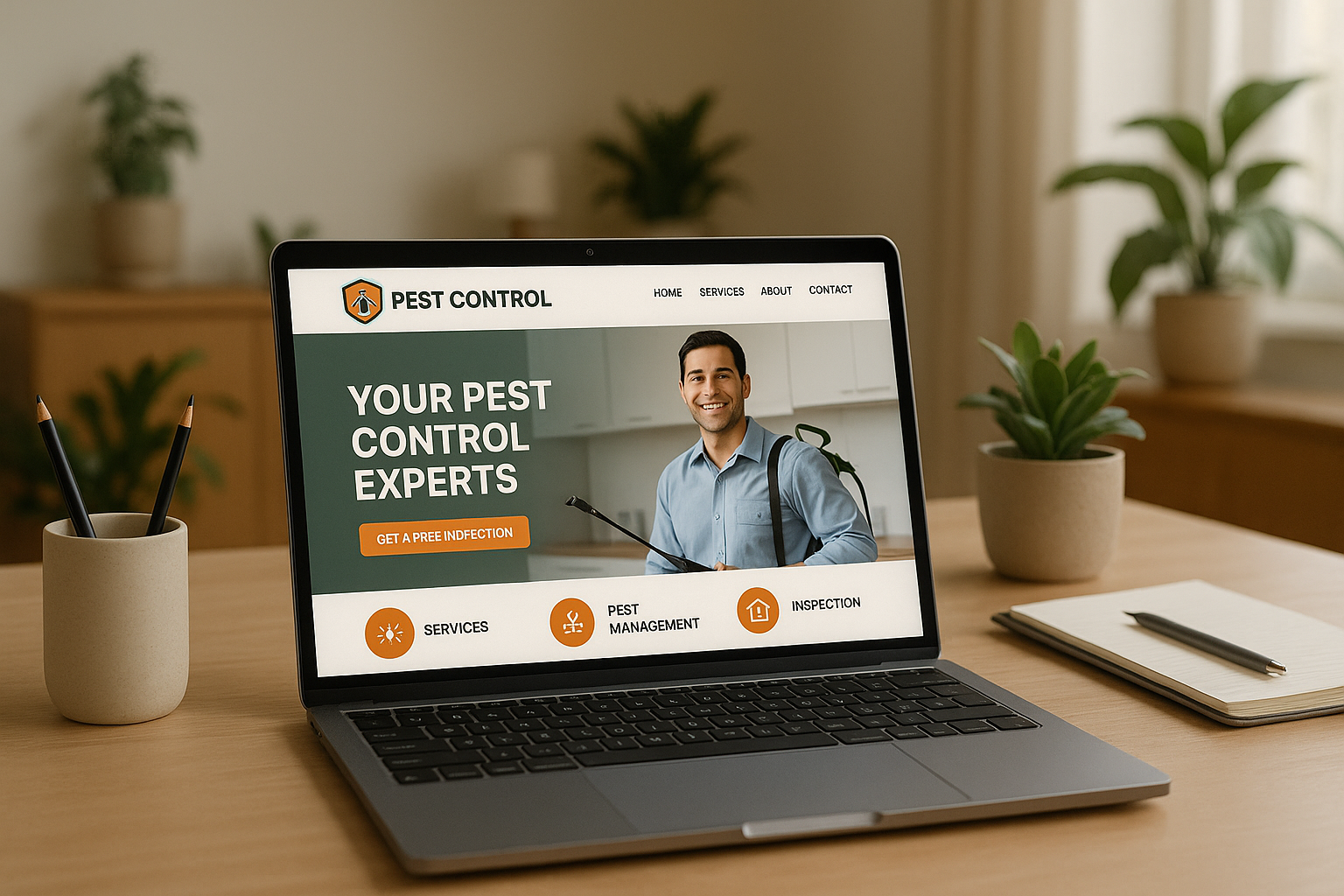
Your pest control website isn’t just a digital presence - it’s your most reliable advertisement and customer service tool. It works 24/7 to attract visitors, answer questions, and convert leads into loyal clients. Here’s why it’s so important:
- First Stop for Customers: Over 90% of users start with search engines when seeking services, and 80% look for online validation before making decisions.
- Trust Through Content: Educational blog posts, FAQs, and real-life success stories position you as a trusted expert, helping you stand out in a $24.1 billion industry.
- Mobile Optimization Matters: With 60% of traffic from mobile devices, a fast, mobile-friendly site is critical. Slow-loading pages can lose over half of potential customers.
- Design and Branding: Clean layouts, professional images, and consistent branding build confidence and keep visitors engaged.
- Convenience is Key: Features like online booking, customer reviews, and clear navigation simplify the user experience, increasing conversions.
Your website isn’t just a tool - it’s a growth engine for your business. By combining helpful content, smart design, and modern tech, you’ll meet customer expectations and stay ahead in a competitive market.
How to Design The Perfect Pest Control Website
How Quality Content Builds Trust and Authority
Great content can turn your pest control website into more than just a list of services - it becomes a go-to resource that homeowners trust. When people find pests in their homes, they’re not just looking for a quick fix; they want expert advice they can rely on. By offering helpful, educational content, you establish your business as the authority they can trust to protect what matters most: their home.
This approach is far more effective than traditional ads, as it prioritizes useful information over sales pitches. By focusing on detailed insights, real-life success stories, and content tailored to your local audience, you can strengthen your website’s credibility and authority.
Educational Content That Answers Key Questions
Creating blog posts and service pages that tackle common homeowner concerns is a powerful way to connect with your audience. Think about questions like: How can I identify different pests? What steps can I take to prevent infestations? What does a pest control treatment involve?
This type of content works because it directly addresses the worries people have while also showing off your expertise. Explaining pest lifecycles, offering seasonal prevention tips, and detailing the science behind treatments helps differentiate professional pest control services from DIY solutions.
Videos are another fantastic way to educate your audience. Short, practical clips that offer tips for preventing common pest problems can reach a broad audience. With over 62% of web traffic coming from mobile devices and 43% of people watching videos on their smartphones, incorporating video content can help build trust and create a more personal connection with potential customers.
Consistency is key here. Regularly publishing fresh, valuable content encourages visitors to keep coming back to your site, solidifying your reputation as the go-to pest control expert in your area.
Customer Success Stories That Build Credibility
Nothing builds trust quite like real-life success stories. Testimonials and case studies provide social proof that your services deliver results, while also showing how you solve real problems.
Educational content informs, but real-world examples validate your expertise. For instance, All-American Pest Control highlighted their skills by sharing cases like resolving a homeowner’s centipede problem by addressing moisture issues or discreetly managing a commercial roach infestation before it spread.
"Choosing a pest control company isn't just about who shows up first in your search results. It's about finding a team you feel comfortable with - one that listens, communicates clearly, and treats your home with care." - All-American Pest Control
When sharing these stories, focus on the specific challenges, the solutions you provided, and the results achieved. Highlighting your diagnostic process, treatment methods, and follow-up care helps reassure potential customers that you can handle their unique pest problems with professionalism and care.
Content That Resonates with US Audiences
Connecting with American homeowners means understanding their specific concerns, seasonal pest challenges, and expectations. Localized content tailored to these needs not only builds trust but also makes your business more relatable.
Pest control challenges vary by region. For example, a homeowner in Florida dealing with palmetto bugs faces very different issues than someone in Minnesota preparing for winter rodents. Your content should reflect these regional differences to stay relevant.
Search trends back this up: "Near me" searches have grown by more than 900% in recent years, and 99% of people have used the internet to find information about local businesses in the past year. Additionally, 46% of all Google searches are tied to local information. This makes regional relevance essential for both visibility and trust.
To create localized content, naturally incorporate city or neighborhood names, address seasonal pest concerns specific to your area, and share customer stories that highlight unique regional challenges. This approach not only boosts your search rankings but also reinforces your website as a trusted resource for local pest control needs.
Content Amplified excels at crafting this kind of targeted, educational content for pest control businesses. They help ensure your website addresses real customer concerns while positioning your company as the trusted expert in your community.
Website Design That Engages and Reflects Your Brand
Your website’s design is often the first impression potential customers have of your pest control business. And as the saying goes, first impressions matter. In fact, 38% of users will leave a website if they find its layout or imagery unattractive. This makes visual appeal a critical factor in encouraging visitors to stay and take action.
Every design choice - whether it’s the color palette, navigation structure, or overall layout - plays a role in building trust. Homeowners need to feel confident inviting your team into their homes, and a well-designed website communicates professionalism, reliability, and attention to detail. These elements create a strong foundation for customer engagement.
Clean, Professional Layout That Works
A visually appealing site is just the beginning. A clean and organized layout ensures visitors can easily find what they’re looking for, making them more likely to trust your ability to handle their pest problems effectively. On the flip side, a cluttered design can overwhelm users and leave a poor impression.
Research shows that users spend an average of 6.44 seconds focusing on the main navigation menu. That’s a short window to make an impact, so it’s essential to create a navigation system that’s intuitive. Include clearly labeled sections like "Services", "Service Areas", and "Contact." Keep the header simple and only display the links that matter most.
Strategic use of white space can also make a big difference. By emphasizing key details - such as your phone number or call-to-action buttons - white space helps visitors quickly locate the information they need. For example, Green Pest Elimination revamped their website with streamlined navigation, high-quality photos, and consistent brand colors. The result? Increased contact form submissions. Customers specifically mentioned the site’s professional appearance and easy access to service details as reasons they reached out.
Additionally, make your contact information highly visible. Placing it in both the header and footer ensures that homeowners dealing with pest emergencies can get in touch without delay.
Consistent Branding Across All Pages
Consistency is key when it comes to building trust and converting visitors into customers. Every page of your website should reflect a unified brand identity, from your logo and color scheme to your fonts and messaging. Studies show that consistent branding can increase brand recognition by 80% and even boost revenue by up to 33%.
To maintain this consistency, create a brand kit that includes your exact color codes, approved fonts, logo variations, and tone-of-voice guidelines. This ensures that anyone working on your website - whether an employee or a marketing partner - delivers a cohesive look and feel. Use your brand colors consistently across headers, buttons, and other design elements to reinforce trust and reliability.
Your messaging tone should also stay consistent. For instance, if your homepage emphasizes friendly, family-focused service, that same approachable yet professional tone should carry through to your service pages and beyond.
High-Quality Images and Accessible Design
The quality of the images on your website can significantly influence how customers perceive your business. Professional photos of your team, equipment, and service vehicles add credibility and showcase your expertise far better than generic stock images. Real photos of your technicians in uniform or on the job highlight your local presence and professionalism.
With over 60% of website traffic now coming from mobile devices, optimizing images for fast loading on smartphones and tablets is essential. Large, unoptimized images can slow down your site, and 39% of users will leave if the content takes too long to load. Make sure your images are compressed for speed without sacrificing quality.
Accessibility is another crucial factor. To meet ADA compliance standards, include descriptive alt text for images, ensure sufficient color contrast, and verify that your site works well with screen readers. These steps not only expand your potential audience but also protect your business from legal risks related to accessibility.
Let your images tell a story about your services. Include before-and-after photos of pest issues you’ve resolved, pictures of your team tackling specific challenges, and even shots of satisfied customers (with their permission). These visuals can help build trust and show potential clients what you’re capable of.
Pest Control Content Marketing by Content Amplified incorporates these design principles to create professional, high-performing websites that turn visitors into customers.
sbb-itb-bfd1c41
Modern Technology That Improves User Experience
Technology evolves quickly, and your pest control website needs to keep pace. Incorporating modern features not only gives your site a fresh look but also simplifies customer interactions, turning casual visitors into loyal clients.
By leveraging the right tools, your website can provide a seamless experience that builds trust. When homeowners can easily navigate your site, book services, and feel confident sharing their details, they’re more likely to choose your business. This foundation also sets the stage for mobile optimization and other enhancements that directly improve user satisfaction.
Mobile-Friendly Design and Fast Loading Times
With mobile devices driving nearly 60% of all internet traffic, optimizing for mobile is no longer optional - it’s essential. In fact, 88% of consumers either call or visit a local business the same day they search for it on their smartphone. For someone dealing with a pest issue at home, they’ll likely be searching for help on their phone. If your mobile site isn’t up to par, you could be losing potential customers.
To make your site mobile-friendly, focus on features like larger buttons, streamlined menus, and clickable contact details. Ensure text is easy to read without zooming, and prominently display contact information. These small adjustments can make a big difference in usability.
Speed is just as critical. Over half of mobile users abandon websites that take more than 3 seconds to load. You can improve load times by compressing images without losing quality, removing unnecessary elements, and regularly testing your site on various devices. With Google’s mobile-first indexing, a fast and optimized mobile site doesn’t just benefit users - it also boosts your search rankings.
Online Booking and Customer Review Tools
Today’s customers expect convenience, and online booking tools deliver just that. They allow users to view available time slots and schedule services whenever it’s convenient - even outside of business hours. Automated scheduling also simplifies job assignments and reduces the risk of double-booking, saving time for both your team and your clients.
Customer reviews are another key element in earning trust. More than 85% of consumers read reviews before deciding on a local business. By integrating review tools directly into your website, you make it easy for satisfied clients to share their experiences. Positive reviews not only enhance your credibility but can also improve your search engine rankings. Together, these features create a smooth process: potential customers can read reviews, book services, and leave feedback - all in one place.
Security Features and Accessibility Standards
Beyond convenience, robust security and accessibility measures are essential for earning and maintaining customer trust. These features complement a well-designed site and authoritative content, ensuring a safe and inclusive digital experience.
SSL certificates are a must - they encrypt the data exchanged between your website and its visitors, protecting sensitive information.
Accessibility is equally important. Designing your site to be usable for everyone, including the 15% of the global population with disabilities, not only broadens your audience but also addresses critical challenges. For example, 71% of people with disabilities abandon websites that aren’t accessible. Moreover, disabled individuals and their networks control a staggering $22 trillion in annual disposable income. Simple adjustments - like adding alt text to images, ensuring proper color contrast, and enabling keyboard navigation - can make a huge impact.
"Web accessibility isn't just about disabled users being able to access your website - it's about everyone being able to access your website." – Trenton Moss, CEO, Webcredible
Regular updates and audits can help you stay ahead of security threats and accessibility issues. With 98% of websites reportedly having accessibility problems, addressing these concerns not only enhances user experience but also sets your pest control business apart.
Pest Control Content Marketing by Content Amplified incorporates these modern features into pest control websites, ensuring they meet today’s standards for security, accessibility, and mobile optimization.
Best Practices for Building and Managing Your Website
Creating a successful pest control website is about more than just putting up a few pages and hoping for the best. The best websites follow proven strategies to turn visitors into customers while staying on top of industry trends and technology changes.
Page Structure That Converts Visitors
A clear, well-organized page structure is key to converting visitors into customers. A thoughtfully designed service page can be one of your strongest sales tools online. On the other hand, a poorly structured page risks confusing potential customers and missing out on opportunities.
Start with headlines that are straightforward and descriptive, immediately letting visitors know what to expect. For example, use specific titles like "Termite Inspection and Treatment in [Your City]" to clearly communicate your offerings. This not only helps visitors but also improves search engine visibility.
Focus your content on outcomes that matter to your customers. Instead of simply stating, "We provide ant control", explain how you’ll eliminate ant colonies and prevent future infestations. Pair this with strong calls-to-action, such as inviting visitors to schedule an inspection or request a quote.
Customer testimonials and reviews add credibility. For instance, Cal Coast Pest Management highlights testimonials that showcase their professionalism and success in pest control. Similarly, Orkin builds trust by emphasizing their certifications and long-standing reputation.
Make sure your pages are mobile-friendly and load quickly. Use a clean layout with clear sections, and include short contact forms that only ask for essential details. Features like live chat or automated chatbots can also offer quick assistance to visitors.
You can also create urgency with time-limited offers during peak pest seasons. For example, offer discounts during spring termite season or fall rodent prevention campaigns to encourage faster decision-making.
By setting up your website with these structural elements, you’ll create a solid foundation for regular updates that keep your site relevant.
Regular Content Updates That Stay Current
Keeping your website updated with fresh content signals to both search engines and customers that your business is active. Seasonal content, in particular, can boost organic traffic by up to 40% during peak times. Blogs or guides on pest prevention and DIY pest control tips can increase visits by as much as 60%.
It’s important to refresh your content regularly. A good rule of thumb is to update content quarterly and review your site’s design annually. Using a content calendar can help you plan ahead for seasonal needs.
For example:
- In spring, create content about termite swarms and ant control.
- In summer, focus on mosquito management and wasp nest removal.
- In fall, highlight rodent prevention tips.
- In winter, address indoor pest issues.
Regularly reviewing your strategy ensures your content stays effective. Consider monthly performance reviews, adjusting strategies quarterly, conducting semi-annual reviews, and doing a full audit and planning session each year.
To make these updates seamless, partnering with website management experts can be a game-changer.
Working with Experts for Website Management
Managing a pest control website requires specific expertise. Studies show that 8 out of 10 shoppers hesitate to trust a business without a website.
Experts can optimize your site for mobile performance and ensure timely updates. This is crucial since users tend to leave sites that take longer than 3 seconds to load.
Professional management also focuses on creating content around seasonal, pest-related keywords to attract local leads. Additionally, they ensure your website reflects your brand with consistent logos, colors, and messaging.
Take the example of Classic Pest Control & Insulation. WorldLight Media added submission forms at key points on their website, resulting in a 34% increase in online leads. These forms, combined with lead magnets like free pest prevention guides, encourage visitors to engage immediately.
“Consider your website a vibrant storefront that never closes its doors... welcoming customers, showcasing your products or services, and driving sales and growth while you're busy with other things.”
- Chad J. Treadway, Partner and Chief Smarketing Officer at Cube Creative
Specialized services like those offered by Pest Control Content Marketing by Content Amplified can handle every aspect of website management. Their services include SEO-driven content creation, custom website design, online booking tools, mobile optimization, and customer review integration. This allows pest control business owners to focus on their operations while ensuring their websites perform at their best.
Working with professionals also helps you stay ahead of industry changes, maintain security standards, and add new features to improve the customer experience. The investment in expert website management often pays off through increased leads and higher conversion rates, transforming your website into a powerful tool for business growth.
Conclusion: Your Website as a Business Growth Tool
By now, it’s clear how combining quality content, effective design, and advanced technology can transform your pest control website into a powerful driver of growth. With the right approach, your site doesn’t just attract visitors - it actively converts them into loyal customers.
Consider this: content marketing generates three times more leads at 62% lower cost compared to traditional marketing methods. This means your website isn’t just a digital brochure; it’s a 24/7 sales tool designed to draw in potential customers who are ready to take action.
But growth isn’t just about bringing in new leads - it’s about keeping the customers you already have. Studies show it costs five times more to acquire a new customer than to retain an existing one. Even a modest 5% increase in customer retention can boost profits by 25–95%. A professionally designed website builds trust, positions you as an authority, and keeps your customers coming back for solutions they can rely on.
The pest control market is on the rise, projected to hit $42.5 billion by 2032. To claim your share of this expanding market, a strong online presence is no longer optional - it’s essential. As Brad Pitts, a Consumer Services Consultant, puts it:
"In the future, I really see it continuing to be strong, even through all the downturns we've had in the economy. As long as you do it the right way and be a leader in the industry, you're always going to grow."
A high-performing website showcases your expertise and makes it easy for customers to choose you. Features like fast mobile loading, online booking options, customer reviews, and educational content work together to set you apart. This seamless integration of design, content, and technology helps you build trust and stay ahead of the competition.
Professional website management services, like those offered by Pest Control Content Marketing by Content Amplified, take care of everything from SEO to mobile optimization. This allows you to focus on what you do best - providing effective pest control solutions - while your website works tirelessly to grow your business.
In a thriving industry, your website is the cornerstone of sustainable success.
FAQs
To make sure your pest control website works well on mobile devices, start with a responsive design that adjusts smoothly to various screen sizes. Speed matters, so aim for fast loading times by compressing images, cleaning up unnecessary code, and using tools to check your site's performance. Keep navigation simple with clear menus and buttons that are easy to tap, even on smaller screens. Finally, focus on a clean and straightforward layout that helps visitors quickly find the information they’re looking for.
To earn the trust of potential pest control clients, focus on delivering educational content that highlights your expertise and provides genuine value. Some effective content ideas include:
- How-to videos that break down common pest problems and their solutions.
- Blog posts offering practical tips to prevent infestations.
- Case studies showcasing real-life success stories from your pest control services.
- Customer testimonials that reflect your reliability and proven results.
- Interactive quizzes to engage visitors and help them identify potential pest issues.
Providing content that's clear, useful, and professional not only builds your credibility but also helps clients feel confident choosing your services.
Including customer success stories on your pest control website is an excellent way to build trust and highlight how effective your services are. When potential customers read real examples of how you've resolved pest issues, it reassures them that your company can deliver results.
These stories also help make your services more relatable by showing that you truly understand the problems your clients face and know how to solve them. By sharing genuine experiences, you create a connection with your audience and make it easier for them to take the next step toward hiring you.