
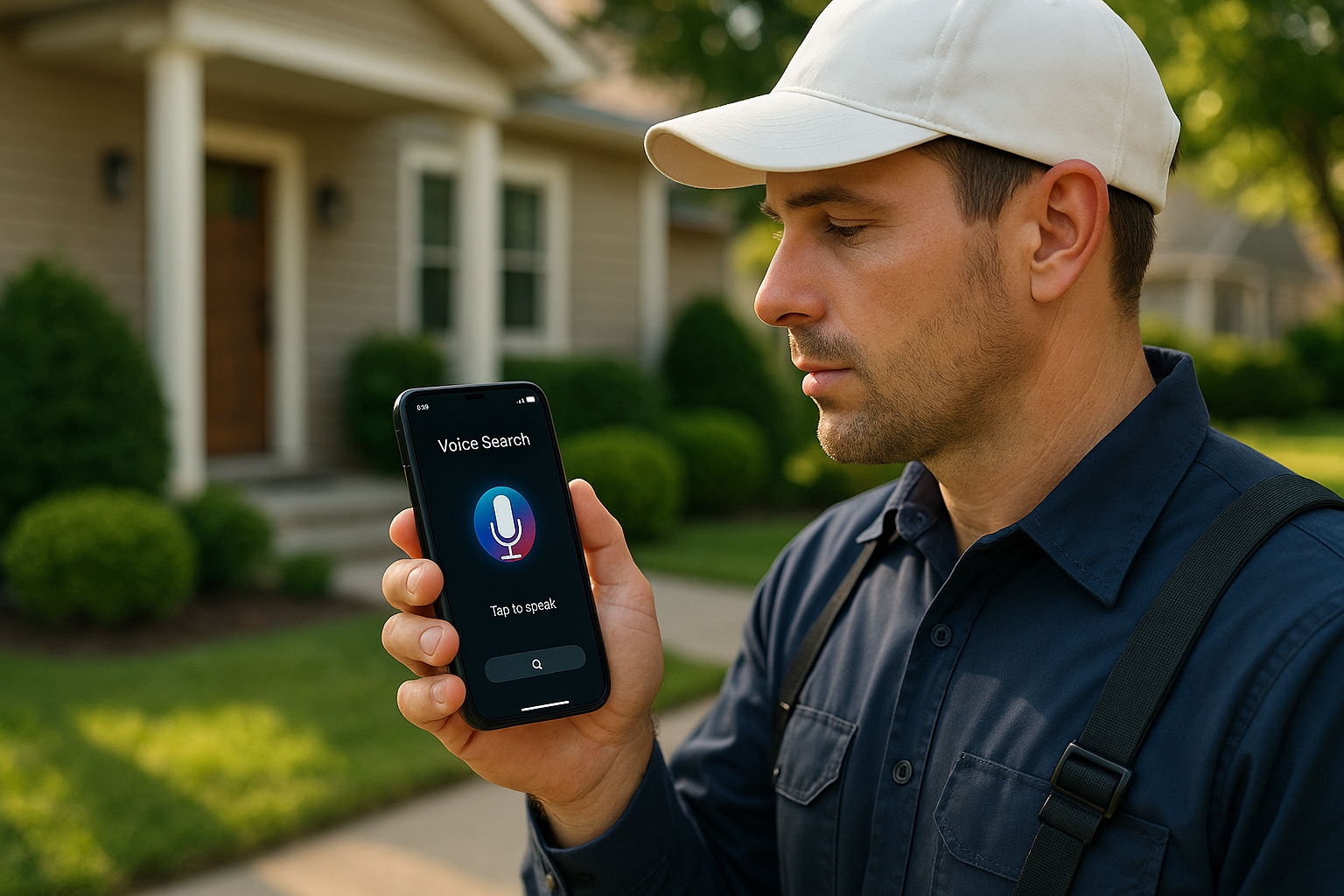
Voice search is transforming how people find pest control services. Homeowners ask direct, conversational questions like, "Who offers emergency pest control near me?" To capture these high-intent customers, pest control businesses need to focus on:
- Local SEO: Ensure your Google Business Profile is accurate and optimized with location-specific details.
- Conversational Content: Use natural language and answer common questions directly, such as "How do I get rid of ants in my kitchen?"
- Mobile-Friendly Design: Your website must load quickly, work seamlessly on smartphones, and provide clear, actionable information.
- Fast Answers: Voice search prioritizes concise, specific responses - especially for urgent queries like "same-day pest control."
This guide explains how to optimize for voice search, covering local SEO, mobile design, content strategies, and tracking tools like Google Search Console. By implementing these steps, you can connect with customers who need immediate pest control services.
SEO & Voice Search A Step-By-Step Guide
Voice Search vs. Text Search: Key Differences
For pest control companies, understanding how voice search differs from text search is crucial to reaching customers when they need help the most. The way people interact with voice assistants compared to how they type on a keyboard leads to different search behaviors, requiring unique approaches to optimization. Let’s explore how these differences can shape your SEO strategy.
Natural Language and Question-Based Queries
When typing a search query, people often use short phrases like "termite treatment cost" or "pest control near me." Voice search, on the other hand, mimics everyday conversation. People talk to their devices as if speaking to another person, using full sentences and natural questions.
For example, a homeowner facing an ant problem might ask, "How do I get rid of ants in my kitchen?" or "Who offers emergency pest control near me?" These spoken queries are longer, more specific, and often include contextual details like location or time.
For pest control businesses, this means shifting focus from short, generic keywords to conversational phrases. Instead of targeting "bed bug treatment", consider optimizing for questions like "How do I know if I have bed bugs?" or "What’s the best way to get rid of wasps?" Voice assistants prioritize content that directly answers these types of questions, making it essential to use natural, spoken language in your content.
FAQ pages are particularly effective here. By addressing common questions in a straightforward, conversational tone, you increase the chances of your content being selected as the direct answer voice assistants read aloud. Voice search thrives on clear, concise responses, especially when tied to local context.
Local Results Take Priority
Voice search is heavily geared toward local businesses, and the data backs this up. Over 58% of users rely on voice search to find local businesses, and 56% use it on smartphones to learn about brands and services. For pest control companies, this local emphasis is especially important.
When someone says, "pest control services near me" or "best exterminator in Charlotte", they’re looking for a nearby solution - not a national chain or a company far away. Voice search algorithms understand this local intent and prioritize businesses with strong local SEO signals.
This focus on local results is critical for capturing urgent leads. Voice assistants typically provide a single, direct answer, often from a featured snippet. Securing that top spot is far more valuable in voice search than in traditional search, where users might still browse other results even if you’re not ranked first.
For pest control, this urgency is key. When homeowners notice pests, their instinct is often to grab their phone and search for immediate help. These are high-intent moments where the customer is ready to act - they’re not casually researching options but seeking a solution right away.
Mobile and Hands-Free Context
Voice search is dominated by mobile, hands-free use, which plays a big role in how pest control customers search for services. Most voice searches happen on smartphones, and this mobile-first behavior shapes the way people look for help. Whether they’re in the kitchen spotting ants, in the bedroom dealing with bed bugs, or outside noticing termite damage, they’re likely using their phone - not a desktop computer.
In these scenarios, voice search offers the convenience of immediate answers. Someone dealing with pests might say, "Hey Google, how do I get rid of cockroaches?" or "Alexa, find emergency pest control near me", without interrupting their current activity. This hands-free convenience is especially important in stressful situations like pest infestations, where people want quick solutions with minimal effort.
The mobile context also means customers expect fast, actionable information. They’re not looking for long articles or detailed explanations - they want quick answers they can use right away. To meet these expectations, your pest control site must be mobile-friendly, with fast loading times, easy navigation, and large, tappable buttons. Delays or poor usability can drive potential customers away.
| Aspect | Voice Search | Text Search |
|---|---|---|
| Query Format | Full sentences and questions ("How do I eliminate ants in my kitchen?") | Short keyword phrases ("pest control near me") |
| Language Style | Conversational and natural | Abbreviated and keyword-focused |
| Local Intent | Strong focus on nearby businesses | Broader, sometimes non-local results |
| Device Context | Primarily mobile and hands-free | Desktop or mobile with active typing |
| User Intent | Immediate, urgent needs | Mix of research and transactional queries |
| Answer Expectation | Specific, actionable solutions | General information is acceptable |
This combination of conversational queries, local focus, and mobile convenience makes voice search a powerful tool for pest control businesses. By tailoring your content to match the way people speak and optimizing for local, high-intent searches, you can connect with customers who are ready to act immediately. Voice search users aren’t just browsing - they’re looking for a solution, and they’re looking for it now.
Local SEO Basics for Voice Search
Building a strong local SEO strategy is key to tapping into voice search queries and reaching customers who need immediate help. Imagine someone asking, "Who can help with termites near me?" Search engines rely on signals like your Google Business Profile, consistent business details, and localized keywords to connect users with your services.
Setting Up Your Google Business Profile
Your Google Business Profile (GBP) plays a central role in voice search results. Since voice assistants often pull information from this profile, having it fully optimized is essential.
Start by ensuring your Name, Address, and Phone number (NAP) are accurate and consistent. Use your full business name exactly as it appears on signage and legal documents to avoid confusion.
Choose the correct business categories to help Google understand your services. For example, select "Pest Control Service" or "Exterminator" as your primary category, and add secondary categories if they apply. This helps voice assistants match your business to spoken queries more effectively.
Define your service areas clearly by listing specific neighborhoods and suburbs. For instance, if you serve Charlotte, highlight areas like Dilworth, Myers Park, or South End. The more precise your service area details, the better search engines can connect you with local voice queries.
Add high-quality photos of your team, vehicles, and completed projects to make your profile more engaging. Encourage happy customers to leave detailed reviews on your GBP, as these reviews act as social proof of your reliability and service quality. Respond to all feedback promptly to show you value customer input. Also, keep your business hours up-to-date, especially if you offer emergency or 24/7 services.
Finally, use conversational language in your service descriptions to explain what sets your pest control company apart. This makes your profile more relatable and voice-search-friendly.
Keeping NAP Information Consistent
Once your Google Business Profile is optimized, ensure your NAP details are consistent across all your online platforms. Regularly check your website, industry directories, and social media profiles to make sure your information matches exactly. For example, avoid listing "123 Main Street" on one platform and "123 Main St." on another. Even minor inconsistencies can hurt your rankings when customers use voice search to find urgent pest control services.
Using Local Keywords in Your Content
Beyond having a strong profile and consistent listings, incorporating local keywords into your content can significantly boost your visibility in voice search. Voice search queries in pest control are often location-specific, with users asking things like "best pest control services in Charlotte" or "emergency exterminator near downtown Raleigh".
Don’t stop at just mentioning your city. Voice search users often include neighborhoods, landmarks, or other local details in their queries. For instance, someone might say "pest control in North Raleigh" instead of just "Raleigh pest control."
To address this, create dedicated location pages for each area you serve. Use the city or neighborhood name in the page’s headline and content, and include references to local landmarks or geographic features. Tailor your content to address regional pest challenges, such as specific pests or climate factors that impact pest activity in your area. This kind of detail improves your chances of appearing in voice search results.
Structure your content in a question-and-answer format to match the conversational tone of voice searches. Use clear headers like "What pests are common in Charlotte?" or "How fast can you respond to a pest emergency in [Neighborhood]?" This format makes it easier for voice assistants to pull direct answers, increasing your chances of being featured in search results.
Technical Requirements for Voice Search
The backbone of your website plays a pivotal role in determining whether voice search users can access your services. Ever since Google rolled out mobile-first indexing in 2019, search engines primarily evaluate the mobile version of your site for ranking and indexing. This shift means your site's technical setup directly impacts how visible you are in voice search results.
Mobile-Responsive Website Design
Most voice searches take place on mobile devices, making your mobile site the main gateway for these interactions. If your site doesn’t function smoothly on a smartphone, you risk losing potential customers before they even get a chance to explore your services.
A responsive design is key to mobile optimization. Your website should seamlessly adapt to any screen size, whether it’s an iPhone, an Android tablet, or any other device. Beyond just fitting the screen, your mobile site should offer easy-to-tap buttons and straightforward navigation. Features like this allow users to quickly find critical information, such as your phone number, service area, or booking options.
Additionally, mobile accessibility features can enhance the experience for all users, particularly those with disabilities. Voice navigation options, clearly labeled elements, and compliance with Web Content Accessibility Guidelines (WCAG) make your site more user-friendly while supporting accessibility.
Ensure that everything available on your desktop site - text, images, and interactive features - can also be accessed on mobile. Proper viewport settings help browsers render your page correctly, and search engines need to crawl all resources, including CSS, JavaScript, and images. Avoid outdated technologies like Flash, which can hurt both mobile performance and voice search indexing.
Once your site is responsive, the next priority is ensuring it loads quickly.
Improving Page Load Speed
Page speed isn’t just about SEO rankings - it directly impacts whether voice search users stick around long enough to become customers. People using voice search for queries like “pest control near me” expect immediate answers. A slow-loading page can send them straight to a competitor.
Fast-loading pages are especially important for local searches, where users often have urgent needs. For instance, someone dealing with a sudden ant infestation or bed bug problem won’t wait for a sluggish website to load. Even a one-second delay can mean missed leads and lost revenue.
Core Web Vitals offer specific metrics to help improve your site’s performance:
- Largest Contentful Paint (LCP): Aim to load the main content in under 2.5 seconds.
- First Input Delay (FID): Keep response times under 100 milliseconds.
- Cumulative Layout Shift (CLS): Maintain layout shifts below 0.1 to avoid frustrating users.
Here are some steps to improve page speed:
- Compress images and use modern formats like WebP to reduce file sizes without sacrificing quality.
- Enable browser caching so returning visitors experience faster load times.
- Optimize server response times to handle traffic spikes, especially during busy pest seasons.
- Minify CSS and JavaScript to reduce the amount of code browsers need to process.
- Leverage Content Delivery Networks (CDNs) to serve content from servers closer to your users. For example, if your business serves Charlotte and its surrounding areas, a CDN ensures customers in neighborhoods like Myers Park or South End get speedy access to your site.
You can track performance using tools like Google Search Console, which provides detailed insights and recommendations. Tools like SEMrush and Ahrefs are also helpful for monitoring the performance of voice-optimized pages over time.
Adding Schema Markup to Your Site
Once your site loads quickly, the next step is refining your code with schema markup to make it easier for search engines to interpret your content. Schema markup, or structured data, helps search engines and voice assistants understand your website. For pest control businesses, this ensures that voice search results accurately display your business information when users ask questions like, “What pest control companies are near me?” or “What are the hours for [Your Business Name]?”
Schema markup works hand-in-hand with responsive design and fast load times to improve voice search visibility. One particularly useful type is FAQPage schema, which highlights Q&A content on your site. By structuring FAQs in a natural, conversational style - such as “How do I get rid of ants in my kitchen?” - you increase the likelihood of appearing in voice search results. Google often pulls short, direct answers from FAQ pages for position zero or featured snippets, which voice assistants read aloud.
In addition to FAQ schema, LocalBusiness schema is crucial for businesses like pest control services. This markup helps voice assistants display accurate details about your service areas, hours of operation, contact information, and customer reviews. When paired with local keywords - like “downtown Charlotte” or “North Raleigh area” - schema markup sends strong signals to voice assistants, helping them pinpoint your service area.
This is especially important because over 58% of users rely on voice search to find local businesses, and 56% use voice search on their smartphones to gather brand and business information.
Finally, track user behavior on your voice-optimized pages by analyzing metrics like bounce rates, time on page, and user flow. These insights can reveal how well your optimizations are working and help you identify pages that need further improvements. By consistently refining your strategy, you can turn voice search traffic into loyal customers.
sbb-itb-bfd1c41
Creating Content for Voice Search
Once your technical groundwork is in place, crafting the right content strategy becomes essential to attract voice search traffic. Voice search thrives on conversational language - essentially, the way people naturally speak. For example, when someone notices ants in their kitchen, they’re more likely to ask, “How do I get rid of ants in my kitchen?” rather than typing a short phrase like “ant exterminator.”
Finding and Using Conversational Keywords
Traditional keyword research often revolves around short, clipped phrases like “pest control near me” or “ant exterminator.” But voice search calls for a different approach - one rooted in complete, conversational questions. Instead of focusing on keywords like “bed bug treatment,” think about the full questions your audience might ask, such as “What’s the best way to get rid of bed bugs?” or “How much does bed bug treatment cost in my area?”
One great way to discover these questions is by listening to your customer service team. They hear the same concerns day in and day out, giving you a treasure trove of ideas. Common patterns include:
- How-to questions: “How do I get rid of termites?” or “How can I prevent roaches?”
- Location-specific queries: “What pest control companies serve downtown Charlotte?” or “Who handles wasp removal in North Raleigh?”
- Urgency-driven searches: “Emergency pest control near me” or “Same-day exterminator service.”
- Cost-related inquiries: “How much does termite inspection cost?” or “What’s the average price for monthly pest control?”
Since voice searches often stem from immediate needs, addressing these questions directly can boost your chances of converting visitors into customers. Adding local details to your keywords can also make a big difference. For instance, a page titled “How to Handle Ant Infestations in Downtown Charlotte” not only speaks to local audiences but also aligns with how people phrase voice search queries.
Writing Direct Answers to Common Questions
Voice assistants favor content that delivers clear, actionable answers. When someone asks, “How do I get rid of ants?”, they’re looking for a straightforward solution that fits their situation. Your job is to provide that clarity.
For example, if someone asks, “What should I do if I find termites in my home?”, your response could outline the steps like this:
- Avoid DIY treatments.
- Look for signs such as mud tubes, hollow-sounding wood, or discarded wings.
- Contact a licensed pest control professional immediately.
By keeping your answers concise and direct, you make it easier for voice assistants to relay your information, which enhances the user’s experience. Cover a wide range of common concerns, from treatment options and pricing to service availability, so customers can quickly find the answers they need.
Writing for Your Local Area
As mentioned earlier in the local SEO discussion, integrating local details into your content is crucial for voice search. But here, it’s about taking that concept further by creating region-specific content that feels relevant to your audience.
Voice search is inherently tied to location - over 58% of users rely on it to find nearby businesses. To capture this local traffic, consider creating dedicated pages for specific neighborhoods or districts. Instead of a generic “Service Areas” page, opt for detailed pages like “Pest Control Services in Myers Park, Charlotte.” These pages can highlight local pest issues, reference well-known landmarks, and describe the types of properties commonly found in the area.
You can also tailor your content to reflect how local factors influence pest behavior. For instance, write about “How Charlotte’s Humidity Affects Termite Activity” or “Why Mosquito Control is Crucial During North Carolina Summers.” Including references to seasonal trends or events - like “Preparing Your Raleigh Home for Fall Pest Season” - can help your content align with timely voice search queries, making it even more useful to your audience.
Tracking Voice Search Results
Once you've optimized your pest control website for voice search, the next step is figuring out if your efforts are paying off. Unlike traditional SEO, where tracking keyword rankings is pretty straightforward, voice search requires a more refined approach. Luckily, there are tools and metrics that can help you measure performance and uncover areas for improvement. Let’s dive into how tools like Google Search Console and Google Analytics capture voice-driven behavior.
Using Google Search Console
Google Search Console is a go-to tool for monitoring how your site performs in voice search. It highlights conversational queries - like "emergency pest control near me" - that are driving traffic to your site. The Performance report is especially helpful for tracking keyword rankings over time, making it easier to spot increases in voice-related searches when your strategy is effective.
The Coverage report ensures that all your voice-optimized content is properly indexed. Since most voice searches happen on mobile devices, the Mobile Usability report is key for identifying and fixing any mobile-related issues that could hurt your performance. And don’t overlook the Enhancements section - this is where you can confirm that Google is recognizing your FAQ schema markup, which can improve your chances of appearing in voice search results and featured snippets.
Analytics Tools for Voice Search Data
To go beyond technical tracking, analytics tools can help you understand how users interact with your site via voice search. Google Analytics 4 (GA4) is particularly useful for analyzing this behavior. Start by isolating organic search traffic and filtering it by mobile devices - an increase in mobile traffic often points to growing voice search activity.
You can refine your analysis further by creating custom segments for voice-driven queries. These are often conversational phrases starting with "how to", "what is", or "where can I." Reports like User Journey and Landing Page, when filtered for mobile traffic, can show which content resonates most with voice search users and whether they’re finding what they need quickly.
Don’t forget to set up conversion tracking for key actions like phone calls, appointment bookings, and contact form submissions. GA4’s event tracking can capture interactions such as clicks on "Call Now" buttons or visits to location pages - critical actions for users seeking immediate pest control services.
While Google’s tools provide a strong foundation, third-party platforms like SEMrush and Ahrefs bring additional value. SEMrush’s Keyword Rank Tracking tool can help you monitor conversational, long-tail keywords like "pest control services in Charlotte" or "emergency exterminator near me." Ahrefs, on the other hand, is great for spotting featured snippet opportunities - important because voice assistants often read these snippets aloud. Both tools also offer insights into backlinks and competitive analysis, helping you compare your visibility to other pest control companies, especially if you operate in multiple locations.
Metrics That Matter
When it comes to tracking voice search success, focus on metrics that tie directly to business outcomes:
- Time on Page: This shows whether visitors are engaging with your content. If users spend very little time on your FAQ or service pages, it might mean the content isn’t answering their questions.
- Bounce Rate: A high bounce rate on voice-optimized pages could indicate that visitors aren’t finding what they need. However, in some cases - like when users get quick answers - a high bounce rate might be acceptable.
- Conversion Rate: Keep an eye on actions like phone calls, appointment bookings, and quote requests. Voice searches often have high intent, so if your conversion rate from voice traffic isn’t outperforming your overall organic traffic, it’s time to revisit your strategy.
- Featured Snippet Appearances: Since voice assistants frequently pull answers from featured snippets, monitor how often your pages appear in these coveted spots.
- Click-Through Rate (CTR): While featured snippets can lower CTR (since the answer is read aloud), ensure your title tags and meta descriptions remain compelling.
- Local Pack Visibility: For pest control businesses, showing up in Google’s local 3-pack is crucial. Strong visibility here can lead to more calls and appointments.
- Mobile Traffic Share: A high percentage of organic traffic from mobile devices reflects the mobile-first nature of voice search.
- Phone Call Duration and Quality: Beyond tracking the number of calls, monitor their length and whether they lead to appointments. This helps gauge the quality of leads from voice search.
For even deeper insights, consider using tools like CallRail or Twilio for dynamic call tracking. These can help you attribute phone calls specifically to voice search traffic. Additionally, keep an eye on Core Web Vitals (Largest Contentful Paint, First Input Delay, and Cumulative Layout Shift), as these directly impact user experience and conversions. If your pest control business serves multiple areas, set up separate conversion goals for each region to better understand local performance.
Finally, compare the behavior of voice search traffic with your overall organic traffic. If voice search users have lower bounce rates and faster conversions, it’s a clear sign that your optimization efforts are hitting the mark.
Conclusion
Voice search is changing the way homeowners connect with pest control services. When unexpected pest issues arise, people often ask their devices, "Where's the nearest pest control?" Your business needs to provide quick, accurate answers to these urgent questions.
Key Takeaways
To capture high-intent voice searches, focus on local SEO, mobile-responsive design, and conversational content. These elements work hand-in-hand: a mobile-friendly site should feature locally tailored content, conversational FAQs need schema markup to be voice assistant-friendly, and your Google Business Profile should mirror the details on your website. When these pieces align, you create a user-friendly experience that turns voice searches into booked appointments.
Steps to Start Optimizing for Voice Search
Building on the strategies outlined earlier, here’s how to take immediate action:
-
Audit Your Google Business Profile: Double-check that your business name, address, phone number, service areas, and hours are up-to-date. Add recent photos of your team and vehicles, and respond to customer reviews - especially negative ones. Voice search often prioritizes highly-rated local businesses, so active engagement here matters.
-
Test Your Website on Mobile: Ensure your site is easy to navigate on a smartphone. Does it load in under three seconds? Are contact details easy to find? Buttons should be large enough to tap without zooming. Use tools like Google’s mobile testing features to identify and fix any issues that might frustrate users.
-
Create an FAQ Page: Build a list of 10-15 questions your customers frequently ask, like "Do you offer same-day pest control?" or "How quickly can you handle a termite infestation?" Write concise answers (40-60 words each) and use FAQPage schema markup to help search engines understand and highlight this content.
-
Optimize Local Pages One at a Time: Focus on specific neighborhoods or areas you serve. For example, a page titled "Pest Control in Downtown Charlotte" that mentions local landmarks and addresses Charlotte-specific pest issues will perform better than a generic service page.
Track your progress using tools like Google Search Console and Google Analytics 4. Set up conversion tracking to measure phone calls and appointment bookings driven by voice search. Pay attention to your featured snippet appearances and visibility in the local pack - these are often the results voice assistants read aloud.
Voice search optimization isn’t a one-and-done task - it’s an ongoing process. Regularly update your content, keep business details accurate, and ensure your site remains fast and mobile-friendly. By combining technical preparedness with conversational content, you can turn urgent voice searches into real business opportunities. Start with these basics, track your results, and expand your efforts over time. The pest control businesses that succeed in voice search make it effortless for customers to find them, understand their services, and take action - all within seconds.
FAQs
To make your Google Business Profile stand out for voice search, start by ensuring all your business details are accurate and up-to-date. This includes your business name, address, phone number, and operating hours. Voice search tends to favor local results, so verifying your location and maintaining consistency across online platforms is key.
Incorporate natural language keywords into your profile description and posts. Voice search queries are often conversational, so using everyday language can make a big difference. Don’t forget about customer reviews - positive feedback not only enhances your credibility but also boosts your visibility in search results. Keeping your profile fresh, accurate, and engaging increases your chances of being featured in voice search results.
When it comes to voice search, the focus shifts to using natural, conversational language. Why? Because people speak differently than they type. For instance, someone might type “pest control near me” into a search bar but ask their voice assistant, “Who offers pest control services nearby?” This highlights the importance of crafting content that answers specific, spoken questions in a clear and concise way.
Voice search also tends to favor local results, making it essential to keep your business details - like your name, address, and phone number - accurate and consistent across all platforms. Additionally, voice assistants often prioritize quick, straightforward answers. Incorporating structured data and aiming for featured snippets can significantly boost your visibility in these searches.
A mobile-friendly website is a must-have for pest control businesses, especially since most voice searches happen on mobile devices. If your site isn’t easy to use on a smartphone, potential customers might leave in frustration, resulting in higher bounce rates and lost leads.
On top of that, search engines give preference to mobile-friendly sites in local search results - making it essential for capturing voice search traffic. Features like responsive design, quick loading speeds, and clear, readable content can help your site meet the needs of both visitors and search engines.