
Timing is everything in pest control email marketing. Seasonal pest activity, like termites in spring or rodents in fall, follows predictable patterns. To maximize bookings, send emails 4–6 weeks before peak pest seasons. For example, promote termite inspections in March or rodent prevention in September.
Here’s how to get started:
- Understand pest cycles: Different pests dominate each season (e.g., mosquitoes in summer, rodents in fall). Tailor campaigns to these trends.
- Segment your audience: Organize your email list by location, service history, and seasonal needs for targeted messages.
- Schedule campaigns: Plan emails ahead of peak seasons, ensuring timely outreach.
- Focus on helpful content: Provide actionable pest prevention tips, then highlight your services with clear calls-to-action.
- Use automation: Automate campaigns based on dates or customer behavior to save time and ensure consistent communication.
With these strategies, you can stay ahead of pest problems, build trust, and drive repeat bookings. Start with one seasonal campaign and refine based on performance data like open rates and conversions.
@figure 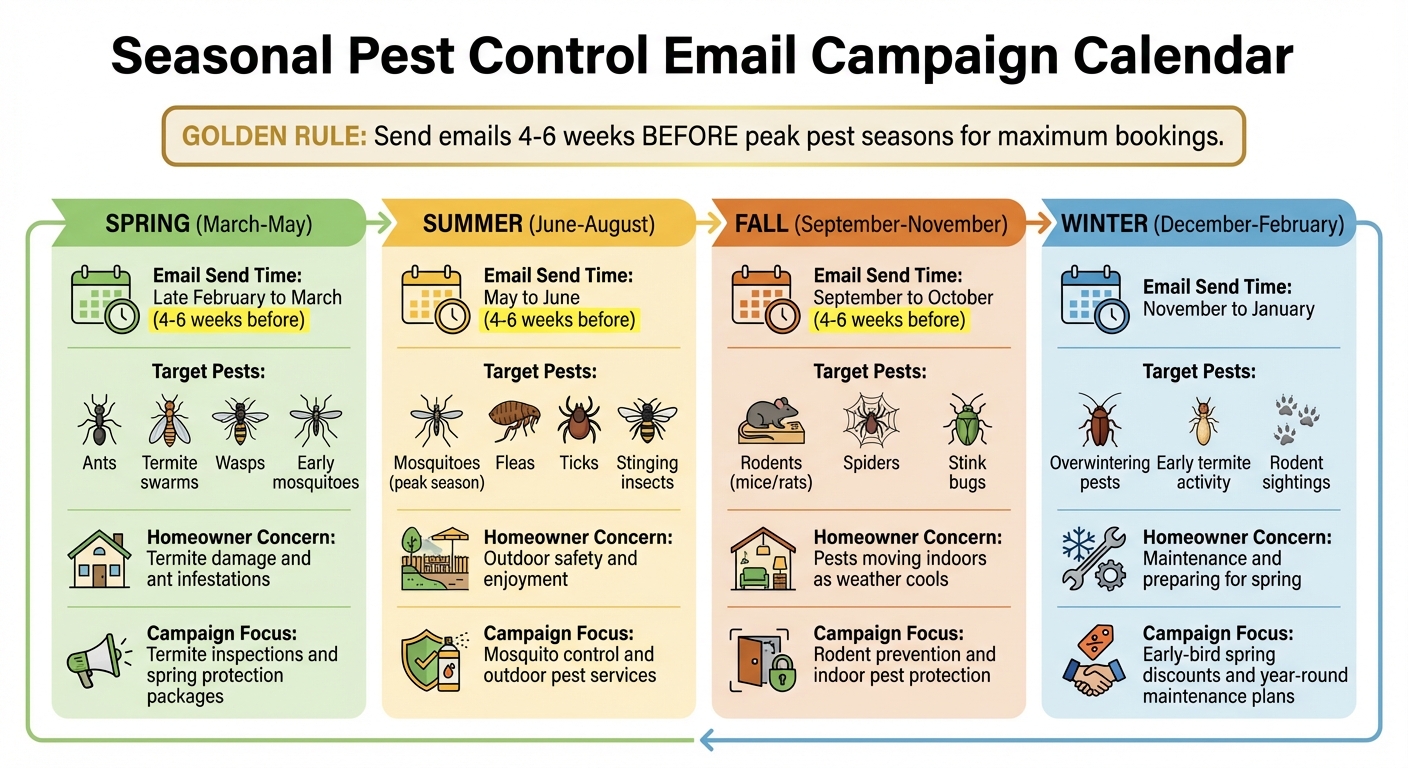 {Seasonal Pest Control Email Campaign Calendar: When to Send for Maximum Impact}
Step 1: Identify Seasonal Pest Patterns and Customer Needs
Step one is all about syncing your campaigns with pest activity and addressing homeowner concerns to make your outreach as relevant as possible.
Research Seasonal Pest Activity
Pest cycles vary across the U.S., influenced by both region and climate. Timing your emails to align with these patterns ensures you reach homeowners when they’re most aware of potential issues.
- Spring (March–May): As temperatures rise, ants, termite swarms, wasps, and early mosquitoes emerge. Homeowners often worry about termite damage and ant infestations during this time.
- Summer (June–August): This is the height of mosquito season, along with increased activity from fleas, ticks, and stinging insects. Homeowners are particularly focused on keeping outdoor spaces enjoyable and safe.
- Fall (September–November): Cooler weather drives rodents, spiders, and stink bugs indoors. Homeowners may notice signs of mice or rats in attics, walls, or basements.
- Winter (December–February): While pest activity slows, termites and early rodent sightings remain a concern. It’s also a good time to promote maintenance services or early spring packages.
Regional differences are equally critical. For instance, warmer states like Texas and Florida deal with pests like mosquitoes and termites year-round, while northern states experience peak rodent issues in the fall. To fine-tune your campaigns, use resources like local extension services (e.g., USDA or state university reports), analyze your past service data, and leverage tools like Google Trends. A localized example might look like this:
"Last fall, rodent calls in [City] jumped by 30% after the first cold snap."
The key is to combine timing with messaging that resonates with seasonal homeowner concerns.
Understand Homeowner Concerns by Season
Each season brings its own set of pest-related anxieties for homeowners. In spring, it’s termite damage; in summer, outdoor safety; in fall, indoor infestations; and in winter, signs of emerging spring problems.
Address these concerns with clear, empathetic messaging to position your business as a trusted partner. Subject lines like “Spring Termites Are Swarming – Protect Your Home Now” or “Mice Are Moving Indoors – Is Your Home Protected?” directly tackle the seasonal worries your audience is likely experiencing. By showing you understand their concerns, you build trust and encourage action.
Step 2: Build and Segment Your Email List
Once you've aligned your campaign timing with seasonal pest cycles, the next step is to ensure your message reaches the right audience. A well-organized email list is the backbone of any successful seasonal campaign. Without a solid list of engaged contacts and smart segmentation, even the most perfectly timed messages can miss the mark. The focus here is simple: build a list of homeowners who want to hear from you and organize that list strategically to deliver the right message at the right time.
Collect and Update Customer Information
Make it easy to capture emails at every possible touchpoint. Add clear, mobile-friendly sign-up forms to high-traffic pages on your website. Sweeten the deal with incentives like free seasonal pest guides, which can increase sign-ups by 20–30%. Don’t stop there - collect emails during service calls, follow-up surveys, and even at in-person events using QR codes to streamline the process. To keep everything organized, integrate your CRM tools, such as FieldRoutes or BrioStack, with email platforms like Mailchimp or Klaviyo. This way, service data and contact information flow seamlessly into your system.
But it’s not just about growing your list; it’s about maintaining it. List hygiene is critical. Regularly remove bounced emails, unsubscribes, and contacts who haven’t engaged in six months or more. A high bounce rate - anything over 2% - can harm your sender reputation and push future emails straight to spam folders. Use automated verification tools to check email addresses at the point of collection, and run re-engagement campaigns to wake up inactive subscribers. If they remain unresponsive, it’s time to remove them. Encourage customers to update their contact details during service interactions or through links in your emails, like a preference center.
Compliance is another key piece of the puzzle. Make sure your emails include clear opt-out options, honest subject lines, and your physical address to meet CAN-SPAM Act requirements. If you’re dealing with California-based customers, ensure you’re also following CCPA guidelines. And whatever you do, avoid buying email lists - it’s a shortcut that damages engagement and could lead to hefty fines.
Once your list is clean and up-to-date, you’re ready to take things to the next level with precise segmentation.
Segment Your Audience for Better Targeting
Sending the same email to everyone on your list is a recipe for wasted effort. Segmentation allows you to tailor your messaging to specific groups, making it far more relevant - and relevance is what drives results. In fact, segmented campaigns can boost open rates by 14–20% and increase click-through rates by 30% compared to generic email blasts.
Start by breaking your list into high-impact segments. Consider service history (new customers versus repeat clients), geographical location (areas with specific pest problems), pest-specific concerns (e.g., past ant treatments versus rodent issues), and seasonal needs (mosquito control in summer versus rodent prevention in fall). For instance, you could target customers who’ve previously booked termite services with a reminder for fall inspections, adjusting the message based on regional pest trends.
You can also add layers like property type (residential versus commercial), engagement level (active openers versus dormant contacts), and lead source (website sign-ups versus referrals). Here’s a practical example: identify customers who’ve used your rodent control services in the past and send them a targeted email about fall prevention tips as temperatures drop. Or focus on a segment of new customers who haven’t booked a second service, offering them a 15% discount on follow-up treatments.
To make this process easier, use your CRM’s tagging and automation features. Tag contacts based on pest type, location, and last service date so your seasonal campaigns can run on autopilot. Just be careful not to over-segment. Groups smaller than 100 contacts can become inefficient and dilute your messaging. Aim for segments that are specific enough to be relevant but broad enough to be effective.
Step 3: Plan Timing and Frequency of Campaigns
Once you've segmented your audience, the next step is to figure out the best timing and frequency for your campaigns. Timing is everything - especially when it comes to pest control. By aligning your emails with seasonal pest patterns, you can reach homeowners before pest problems become emergencies.
Schedule Emails Ahead of Peak Seasons
Sending emails 4–6 weeks before peak pest activity gives homeowners enough time to book preventive services. Here’s how you can plan your seasonal campaigns:
- Late February to March: Focus on ants and termites as spring approaches.
- May to June: Highlight mosquito and outdoor pest services to prepare for summer.
- September to October: Promote rodent and indoor pest prevention as the weather cools.
- November to January: Offer early-bird spring discounts and year-round maintenance plans.
Timing is key - emails sent just before homeowners start noticing pest issues are more likely to result in bookings. This positions your service as the go-to solution when they’re ready to act. Keep regional differences in mind. For instance, a pest control company in Florida might need to start mosquito campaigns as early as February, while in Minnesota, late spring and summer campaigns will be more effective.
Once you’ve nailed down your schedule, it’s time to figure out how often to reach out without overwhelming your audience.
Balance Email Frequency
The ideal email frequency varies depending on your audience segment. Here’s a general guide:
- Active customers (2–4 emails per month): Include a mix of monthly newsletters with pest prevention tips, seasonal offers, reminders two weeks before scheduled visits, follow-ups within 24 hours after service, and occasional promotions during slower periods.
- One-time or past customers: Stick to a lighter approach. Send a monthly newsletter and three to four seasonal check-ins each year.
- New leads: Start with a short nurture sequence - two to three emails in the first month featuring educational content and a limited-time offer. Afterward, transition them to your standard newsletter.
Keep an eye on your metrics. If you notice high unsubscribe or spam rates, it might be a sign you’re over-emailing. On the flip side, low open and booking rates could mean you’re not reaching out enough.
sbb-itb-bfd1c41
Step 4: Create Engaging and Useful Email Content
Once you’ve nailed down your targeted list and optimal timing, it’s time to focus on crafting email content that resonates. The goal? Educate your audience first and sell second. Homeowners are more likely to trust and engage with emails that provide actionable advice rather than a hard sales pitch. This approach not only builds credibility but also encourages service bookings.
Focus on Seasonal Pest Advice and Solutions
Tailor your emails to address the pests homeowners are likely dealing with during each season. For example:
- Spring: Ants, termites, and early mosquitoes.
- Summer: Mosquitoes, wasps, and stinging insects.
- Fall: Rodents, spiders, and stink bugs moving indoors.
- Winter: Overwintering pests and early spring specials.
Start each email with a short, attention-grabbing hook that connects the season to a specific pest problem. For instance:
"As spring temperatures rise, ants and termites become active, threatening your kitchen and even your home’s foundation."
Follow this with three to five actionable tips, like keeping mulch away from your home, sealing gaps, fixing leaks, and properly storing food. These practical steps show you’re invested in helping homeowners protect their homes.
After offering solutions, explain when professional help becomes necessary. While DIY methods are useful for prevention, recurring pest sightings, structural damage, or active infestations call for expert attention. Highlight your seasonal services - such as inspections, treatments, and guarantees - and pair them with a time-sensitive offer like:
"Book your Spring Protection Package by April 15 and save $50!"
Use Personalization and Calls-to-Action
Personalization goes beyond just adding the recipient's name. Incorporate local pest trends or past service history to make your emails more relevant. For example:
"In Phoenix, scorpions and roof rats become more active as temperatures climb."
If a customer had a termite treatment last year, send a renewal reminder with seasonal tips. For one-time clients, suggest scheduling their next treatment. Subscribers on a mosquito plan? Send alerts when the season kicks off.
Your subject lines and preview text should be short, specific, and highlight a clear benefit. For example:
-
Spring:
Subject line: "Termite Season Is Coming: What To Watch For"
Preview text: "3 quick checks you can do this weekend - plus $50 off a professional inspection." -
Summer:
Subject line: "Mosquitoes Are Here - Protect Your Backyard Evenings"
Preview text: "Simple steps to reduce bites and a summer mosquito treatment special." -
Fall:
Subject line: "Stop Mice Before They Move Into Your Home"
Preview text: "How to seal entry points - and when to call in a pro."
Keep subject lines under 45 characters for better visibility on mobile devices. Include one clear call-to-action (CTA) like "Book Your Spring Inspection" or "Schedule Rodent Protection." Use a large, easy-to-spot button near the top and bottom of your email. Add low-pressure language like "Takes less than 60 seconds" or "No obligation quote" to make readers more likely to click. Link the CTA directly to a booking form or seasonal service page.
Design Mobile-Friendly Templates
Since most pest control emails are opened on mobile devices, your design needs to be clean, readable, and easy to navigate. Stick to a single-column format about 600 pixels wide, with text sizes of 14–16 pixels for the body and 20–24 pixels for headlines. Keep paragraphs short - one to three sentences max - and use bullet points for quick scanning.
Make your call-to-action buttons large and thumb-friendly (at least 44×44 pixels) with clear labels and plenty of white space around them. Use images to enhance your message, such as photos of your team, treated areas, or pests. Keep images compressed for faster loading, and include descriptive alt text so your message is clear even if the images don’t load.
Don’t forget to include your logo, brand colors, and contact information in every email for consistent branding. Test your templates across major email platforms like Gmail, Outlook, and mobile apps to ensure they look great everywhere - including in dark mode. If designing seasonal templates feels like too much, consider working with a service like Pest Control Content Marketing by Content Amplified. They can create reusable, mobile-optimized templates that keep your campaigns polished and professional year after year.
Step 5: Use Email Automation and Track Performance
Automation turns seasonal email marketing into a hands-free process. Instead of manually sending termite reminders every March or mosquito alerts each June, you can set up workflows that automatically trigger emails based on dates, customer actions, or service history. This not only saves your team time but also ensures homeowners receive timely, relevant messages year after year. It’s a smart way to connect your planning efforts to actionable results.
Set Up Automated Campaigns
Once you’ve segmented your audience and planned your campaigns, automation makes it all run smoothly without constant manual input. By using workflows tied to dates, customer behavior, or service milestones, you can keep your audience engaged with minimal effort.
- Date-based workflows: These emails go out on specific calendar dates tied to seasonal pest activity. For example, send spring termite reminders in March or April, summer mosquito alerts in June, fall rodent prevention tips in September or October, and winter maintenance offers in December or January. Aim to send these messages 4–6 weeks before peak pest seasons so homeowners can schedule services ahead of time.
- Behavior-based workflows: These are triggered by customer actions. If someone opens your email but doesn’t click, follow up with a stronger offer a few days later. If they click on a service link but don’t book, send a limited-time discount within 24 hours. These workflows respond to real-time engagement and keep your audience moving toward conversion.
- Service-based workflows: These rely on your CRM or scheduling system. For instance, send a welcome email series after a customer’s first service, follow up 24 hours and 7 days later to check satisfaction and request reviews, or send renewal reminders 2–4 weeks before an annual plan expires. You can also target inactive customers with reactivation emails after six months of no activity.
To make this work, use email platforms like Mailchimp or Constant Contact that support automation and segmentation. Integrate these tools with your CRM or field-service software to ensure customer and service data flows seamlessly. Collect information such as name, email, address, ZIP code (for local targeting), pest concerns, service history, engagement behavior, and customer status. This data allows you to set precise triggers, like sending a termite reminder to customers in high-risk ZIP codes who haven’t had a treatment in 11–13 months.
Track Key Metrics to Improve Campaigns
Once your workflows are in place, tracking their performance is essential. Monitoring key metrics helps you understand what’s working and where you can improve.
- Open rate: A good benchmark is 20–30%. Seasonal emails often perform on the higher end when timed to active pest concerns. This metric helps you assess the effectiveness of your subject lines and timing.
- Click-through rate (CTR): This shows whether your content and calls-to-action are resonating. Aim for a CTR between 2–5%, with higher rates expected for targeted service reminders or limited-time offers.
- Conversion rate: This is the ultimate measure - how many recipients book a service or sign up. Use tagged links (UTM codes) or unique call-tracking numbers in your emails to measure completed bookings and revenue. Even a small boost in pre-season bookings can lead to significant revenue increases.
Keep an eye on unsubscribes (aim for under 1%) and spam complaints (keep these below 0.1%) as indicators of email quality. If these numbers spike, it may signal issues like irrelevant content, over-sending, or misleading subject lines.
Use this data to refine your campaigns. For example, A/B test subject lines - compare one focusing on the problem ("Termite Season Is Coming: Protect Your Home Now") against one highlighting the solution ("Save 15% on Spring Termite Protection"). Analyze open and click rates to find the best days and times to send emails. Dig into segmentation metrics - if annual plan customers open emails but don’t convert on new plan offers, shift your focus to promoting add-on services instead.
Over time, this approach will help you build a reliable playbook. You’ll know which subject lines, offers, and send times work best for each season, audience segment, and service type, turning your email marketing into a well-oiled machine.
Conclusion
Seasonal email campaigns succeed when they address the specific pest challenges homeowners face throughout the year. By identifying pest trends, segmenting your audience, timing emails 4–6 weeks before peak seasons, crafting clear and helpful messages, and leveraging automation to track performance, you position yourself as the go-to expert. Whether it’s spring termites, summer mosquitoes, or fall rodents seeking shelter, these strategies help you stay relevant and reliable in your customers' eyes.
For instance, sending a termite prevention reminder in March or rodent-proofing tips in September ensures your message reaches homeowners at just the right moment. Segmenting your audience based on location, service history, or customer status makes your emails more effective - whether you're welcoming a new client, re-engaging someone who hasn’t booked in a while, or rewarding a loyal annual plan member. Providing actionable, problem-solving content builds trust, encourages clicks, and turns interest into scheduled appointments.
Regular, well-timed emails keep your business top of mind and drive growth through promotions, referrals, and recurring service plans. Even small adjustments, like refining subject lines or optimizing send times, can significantly improve results.
Now’s the perfect time to get started. Pick one seasonal campaign - like spring ant prevention or fall rodent control - segment your list, and track key metrics such as open rates, clicks, and conversions. Experiment with subject lines and timing to discover what resonates with your audience. Over time, you’ll develop a proven strategy that keeps your schedule full and your business thriving.
For more tips on pest control email marketing, visit Pest Control Content Marketing by Content Amplified.
FAQs
To get the timing right for your pest control email campaigns, align them with seasonal pest activity and the climate in your region. Look into when pests like ants, which tend to show up in spring, or rodents, often active in fall, are most problematic in your area. Then, schedule your emails to go out a month or two before these peak times. This way, your message lands in inboxes just as homeowners start thinking about pest control, making it both timely and useful.
To craft impactful pest control email campaigns, start by segmenting your audience. Break down your email list based on factors like pest type, homeowner demographics, location, property type, and specific pest concerns. This approach allows you to send content that speaks directly to your audience's needs.
For instance, during the summer, you could share mosquito prevention tips with homeowners in warmer climates. Or, you might highlight termite inspection services for older properties that could be at higher risk.
By addressing the specific concerns of each group, your emails become more relevant, helping you build trust and keep your audience engaged.
To streamline your seasonal pest control email campaigns, start by choosing a reliable email marketing platform. This will allow you to schedule your messages and segment your audience based on factors such as timing, location, and customer behavior. Focus on crafting content tailored to the season, addressing common pest problems that arise during that time of year. Use automated workflows to handle follow-ups, reminders, and promotional offers effortlessly.
Keep an eye on key metrics like open rates and click-through rates. Regularly analyzing this data can help you fine-tune your approach, ensuring your campaigns remain relevant and keep your audience engaged throughout the year.