
When homeowners search for pest control services, they want fast, local help. If your business isn’t showing up in their search results, you’re losing potential customers. This guide explains how pest control companies can use AI tools and GEO-targeted strategies to improve their visibility in local searches and attract more clients.
Key Takeaways:
- Focus on Local Keywords: Use city names, neighborhoods, and ZIP codes in your content to match how customers search (e.g., “ant exterminator in downtown Phoenix”).
- AI-Powered Content: Tools like ChatGPT can help create location-specific service pages and blogs that address local pest issues.
- Optimize Google My Business (GMB): Keep your GMB profile updated with accurate details, photos, and customer reviews to rank higher in local search results.
- Seasonal Trends: Tailor content to reflect seasonal pest problems in your area (e.g., “mosquito control in summer”).
- Metadata Optimization: Add local keywords to page titles, meta descriptions, headers, and image alt text to improve search engine rankings.
By combining these strategies, pest control companies can position themselves as the top choice for urgent, local pest problems.
Pest Control Local SEO Tutorial 2025
GEO-Specific Keywords for Pest Control Companies
To improve your online visibility, GEO-specific keywords are a game-changer for pest control companies. With 46% of Google searches focusing on local intent and "near me" searches skyrocketing by over 900%, it’s clear that mastering location-based keyword strategies is essential for capturing local demand.
Finding High-Value Local Keywords
Understanding how your customers search for pest control services in their area is key. People often use detailed phrases like "termite inspection Dallas" or "ant exterminator in downtown Phoenix." These specific, location-based keywords are exactly what you should target.
Tools like Google Keyword Planner can help you uncover the exact terms people in your area are searching for. Focus on combining your services with city names, neighborhoods, or ZIP codes. For instance, if you operate in Atlanta, you might identify keywords such as "bed bug treatment Buckhead", "roach control Midtown Atlanta", or "pest inspection 30309."
Pay attention to seasonal trends in your keyword research. For example, summer might bring a surge in searches for "mosquito control", while winter could see more interest in "rodent exterminator" services. Aligning your content with these patterns ensures you’re meeting customer needs when demand is highest.
Since 68% of emergency pest control searches happen on mobile devices, targeting phrases like "emergency exterminator [city]" or "24-hour pest control [neighborhood]" can help you attract high-intent customers who need immediate assistance.
These insights provide a solid foundation for creating content that speaks directly to your local audience.
Creating Location-Specific Content
Once you’ve identified your target keywords, the next step is to create content tailored to your local audience. Start by building dedicated service pages for each area you cover.
Address specific pest control challenges unique to each location. For example, a page focusing on Phoenix could highlight how the desert climate impacts termite behavior, while a Denver page might discuss how altitude and dry air affect pest activity. These localized details make your content more relevant to potential customers.
You can also write blog posts that highlight seasonal or neighborhood-specific issues. For instance:
- "Why Scottsdale Homeowners See More Scorpions in Summer"
- "How Chicago's Harsh Winters Drive Mice Indoors"
These topics naturally incorporate location-based keywords while offering valuable insights to your audience.
Another approach is to tie your content to local landmarks or neighborhoods. A blog titled "Protecting Historic Homes in Charleston's French Quarter from Termites" not only targets location-specific keywords but also addresses concerns that resonate with homeowners in that area.
By consistently publishing content that addresses local pest problems, you position yourself as the go-to resource for pest control in your region. This builds trust with both your audience and search engines, improving your rankings for local searches.
Adding GEO Keywords to Metadata
Optimizing your site’s metadata is crucial for signaling to search engines where you operate and what services you provide. This includes strategically placing location keywords in your page titles, meta descriptions, headers, and image alt text.
- Page Titles: Combine your service with your location for clarity. For example, instead of "Termite Inspection Services", use "Termite Inspection Services in Austin, TX | [Company Name]."
- Meta Descriptions: These should include location keywords while highlighting your services. A strong example might be: "Professional bed bug treatment in downtown Seattle. Same-day service available. Call now for a free inspection in King County."
- Headers (H1, H2, H3): Use location keywords naturally, such as "Common Ant Problems in San Diego Neighborhoods."
- Image Alt Text: Add location context where relevant. Instead of "exterminator spraying", use "pest control technician treating ant infestation in Phoenix home."
Lastly, ensure your business details - like name, address, and phone number - are consistent across all platforms. Search engines use this consistency as a trust signal for local businesses.
Above all, make sure your optimization efforts feel natural to readers. Search engines are smart enough to detect keyword stuffing, so focus on creating content that genuinely serves the needs of your local audience.
Using AI Tools for Local Content Creation
Building on GEO keyword strategies, AI tools have revolutionized how pest control companies create content tailored to their local customers. Instead of spending hours crafting content from scratch, you can use artificial intelligence to quickly generate location-specific material that addresses the unique pest challenges in your service areas. Below are some practical ways to integrate AI into your local content strategy.
Writing Local Service Pages and Blogs with AI
AI platforms like ChatGPT and Google Bard can help you create content that addresses specific pest issues in your target regions. The secret lies in crafting detailed prompts that include your location, common pests, and local context.
For instance, if you're developing a service page for termite control in Miami, you might use a prompt like:
"Write a service page for termite control in Miami, Florida. Include details about how the humid subtropical climate affects termite activity, mention common termite species in South Florida, and address concerns related to older homes in neighborhoods like Coral Gables."
The AI will generate content that naturally incorporates local keywords and addresses customer concerns. You can then refine the draft by adding details about your company's services, pricing, and contact information.
When it comes to blog posts, AI can assist in creating content that focuses on seasonal pest issues in your area. For example, a prompt such as:
"Write a blog about why cockroach infestations increase in Houston during the summer months, and include prevention tips for homeowners"
can produce content that resonates with your audience and provides actionable advice.
AI is great for creating a strong first draft, but it’s essential to refine the content with your expertise to ensure it feels authentic and authoritative.
Producing More Content with AI
AI’s ability to streamline content creation means you can scale your efforts without overextending your resources. This is especially helpful if your pest control company serves multiple cities or regions.
For example, you can start with a general template - like a guide on "preparing homes for winter pest prevention" - and then use AI to customize it for different locations, adjusting for each city's climate and common winter pests. By feeding the AI a list of topics and locations, you can generate multiple variations in one session, keeping your content pipeline full and diverse.
AI also helps maintain consistency in your brand voice. By providing examples of your existing content and clear style guidelines, you can ensure the material it generates aligns with your company’s tone and messaging.
Targeting Seasonal and Regional Pest Trends
AI tools can analyze search trends and customer behavior, helping you align your content with seasonal pest patterns in your service areas. This data-driven approach ensures you’re publishing the right content at the right time.
For example, AI might reveal that searches for mosquito control services spike during spring in one region, while demand for rodent control peaks in another area during winter. This insight allows you to plan your content calendar around customer needs, ensuring your posts are timely and relevant.
AI can also highlight regional differences, such as the unique challenges faced by urban homes versus those near water sources. With this information, you can tailor your content to address specific pest control concerns for each local market.
sbb-itb-bfd1c41
Optimizing Google My Business for Local Search
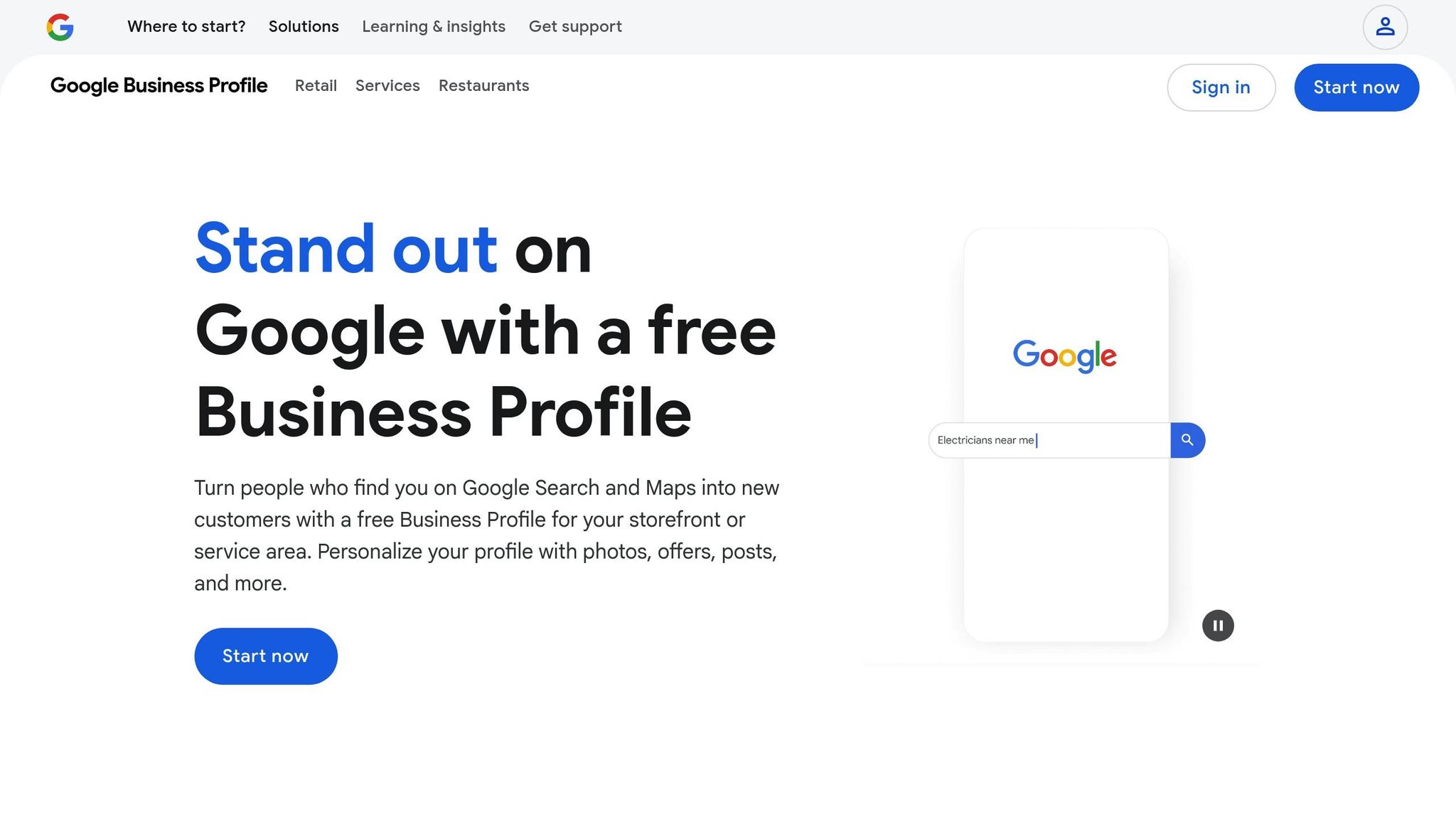
Your Google My Business (GMB) profile plays a crucial role in attracting local pest control customers. When someone nearby searches for terms like "termite control near me" or "pest control in [city name]", a well-maintained GMB listing can be the deciding factor between gaining a new customer or losing them to a competitor. This platform significantly affects your visibility in local search results and on Google Maps, making it an essential part of your local SEO strategy. Let’s dive into the key components of an effective GMB profile.
Google My Business Profile Basics
Start by filling out every field in your GMB profile with accurate and consistent information. Your business name should match exactly how it appears on your website and other directories - no shortcuts or variations. Include your complete address, phone number, and website URL to avoid any confusion for both customers and search engines.
Select the most relevant primary category for your business, such as "Pest Control Service." Then, add secondary categories that reflect your areas of expertise, like "Exterminator", "Wildlife Control Service", or "Termite Control Service." These categories help Google understand your offerings and match your business to the right searches.
Be specific about the areas you serve. If your service radius is 25 miles, set that exact distance rather than leaving it vague. List the cities, neighborhoods, and ZIP codes you cover to ensure your business appears in searches for those areas.
Make sure your business hours are up-to-date, including special hours for emergencies or seasonal changes. If you offer 24/7 emergency services, mark it clearly on your profile. Accurate hours not only help customers but also improve your local relevance in search results. Regularly review and update these details to avoid frustrating potential clients.
Upload high-quality images, including your logo, cover photos, and pictures of your team or work. These visuals often appear in search results and can help build trust and recognition for your brand.
Using Reviews and Images for Better Rankings
Customer reviews are a powerful factor in local search rankings and influence how potential clients perceive your business. Google considers both the number and quality of reviews when determining your ranking.
Make it easy for happy customers to leave reviews by providing direct links to your GMB review page. Follow up with texts or emails after completing a service, and encourage your team to mention reviews during positive interactions with clients.
Respond to every review - whether it’s glowing praise or constructive criticism - within 24-48 hours. Thank customers for their kind words and address any issues raised in negative reviews with professionalism. This shows potential clients that you value feedback and are committed to excellent service.
Keep your profile active by regularly uploading fresh photos. Share images of your team, successful service outcomes, or seasonal pest control tips. Google rewards businesses that consistently update their content, and photos can help customers visualize what you offer.
Use GMB posts to share updates like seasonal pest trends, promotions, or expert tips. These posts appear directly in your business listing and can include call-to-action buttons to drive phone calls or website visits. Regular updates keep your profile engaging and relevant.
Keeping Information Consistent Across Directories
Consistency is key when it comes to your business information. Any discrepancies across your GMB profile, website, or other directories can confuse search engines and hurt your local rankings. Uniform listings make it easier for search engines to connect your business with relevant local searches.
Create a master document with your exact business name, address, phone number, website URL, and description. Use this as your reference whenever you update online listings to ensure everything matches perfectly.
Focus on updating major directories first, such as Yelp, Yellow Pages, Better Business Bureau, Angie's List, and industry-specific platforms like Pest Control Technology's directory. These high-authority sites carry more weight with search engines, boosting your credibility.
Keep an eye out for duplicate or unauthorized listings. Set up Google Alerts to notify you whenever your business name appears online. This helps you quickly address any inconsistencies or unauthorized mentions.
When making changes to your business information - like updating your phone number or hours - update all directories simultaneously. Staggered updates can lead to temporary mismatches, confusing both search engines and customers trying to reach you. Regular maintenance ensures your business stays easy to find and contact.
Advanced GEO Strategies for AI-Driven Local Search
Once you've laid the groundwork with GEO keyword and content optimization, it's time to take things up a notch. Advanced strategies can tap into AI's capabilities to create hyper-local connections with your audience.
Using AI for Personalized Local Offers
AI can help you design personalized local offers that set your pest control business apart. By analyzing local audience data - like browsing habits, purchasing trends, and how they engage with content - AI enables you to tailor offers that speak directly to specific neighborhoods. This level of personalization not only grabs attention but also builds stronger connections within your community. Segment your audience using AI insights to develop offers that address the unique needs of each area, driving deeper engagement and fostering trust in your local market.
Conclusion: Winning Local Search with GEO-AI Strategies
Blending GEO-targeted strategies with AI tools offers pest control companies a powerful way to stand out. With the U.S. pest control industry projected to hit $26.1 billion in revenue by 2025, growing 2.7% from the previous year, maintaining a strong local presence is more important than ever.
To thrive, focus on three key elements: using location-specific keywords strategically, creating content with AI tools, and fine-tuning your local business profiles. These steps work together to boost your visibility and relevance in your target areas.
The nature of pest control makes local visibility critical. When a homeowner spots termites or deals with a sudden wasp problem, they need a nearby expert - fast. A well-executed local strategy ensures you're the go-to option when those urgent calls come in.
This immediate need highlights the importance of staying ahead. Businesses that embrace AI-driven tools and respond quickly to changing trends will be better positioned to attract leads and grow in this competitive market.
FAQs
AI tools, such as ChatGPT, are transforming how pest control companies approach content creation. These tools can quickly generate locally tailored content, including geo-focused keywords, customized service descriptions, and engaging blog posts. This targeted approach helps improve local search rankings and draws in nearby customers.
Beyond that, ChatGPT is also a handy resource for writing personalized responses to customer reviews and inquiries, as well as crafting attention-grabbing social media posts. By leveraging these features, pest control businesses can strengthen their connection with the local community, boost visibility, and gain an edge in local search results.
To make your Google My Business (GMB) profile stand out in local search results, start by double-checking that your business details - like your name, address, and phone number (NAP) - are accurate and match across every platform. This consistency isn’t just for show; it helps search engines and potential customers trust your business.
Another key move? Stay on top of customer reviews. Respond quickly and professionally, whether the feedback is glowing or critical. It shows you care and keeps your profile active. Don’t forget to keep your profile fresh by regularly adding new posts, photos, or special offers. These updates make your business more engaging and relevant to customers.
Lastly, sprinkle local keywords into your business description and posts. This helps align your profile with what people in your area are searching for. These efforts can boost your visibility by improving your relevance, proximity, and prominence - three major factors in Google’s local search algorithm.
Seasonal shifts have a big impact on the types of pests people search for, which means they also influence the most effective keywords for pest control businesses. For example, spring often sees a spike in searches for ants and termites, while summer tends to bring an uptick in demand for mosquito and wasp control. By tailoring your keyword strategy to match these seasonal patterns, your business can remain relevant to local customers and attract more leads.
To boost your online visibility, weave season-focused keywords into your website content, blog posts, and Google My Business profile. This approach helps ensure your business shows up when people are actively searching for solutions to their pest issues.