

Generative Engine Optimization (GEO) is reshaping how pest control businesses connect with customers in the age of AI-powered search. Unlike traditional SEO, which focuses on keywords and user engagement, GEO ensures your business is visible in AI-generated answers by prioritizing structured, machine-readable data. Here's the quick takeaway:
- What is GEO? It's about optimizing your business information (services, pricing, reviews) for AI systems to recommend you in local search results.
- Why it matters for pest control: Customers often need urgent solutions, and AI highlights only a few top local options. If your business isn't optimized, you risk being left out.
- How to optimize: Update your Google Business Profile with detailed service descriptions, pricing, and reviews. Use structured data like schema markup to make your website AI-friendly.
- Key tools: Leverage LocalBusiness, Service, FAQ, Review, and HowTo schema to improve AI recognition.
Adapting SEO Strategies for AI: Mat Rogers of Lizard Marketing | PCM 137
Optimizing Local Business Profiles for AI Search
Local business profiles are a treasure trove of structured data that AI systems rely on to generate recommendations. For example, if someone asks an AI assistant about pest control services nearby, the system pulls information directly from business profiles to craft its response. The more detailed and complete your profiles, the better your chances of being featured in these AI-generated recommendations. Start by refining your Google Business Profile to ensure AI tools can easily access all the key details.
Improving Your Google Business Profile
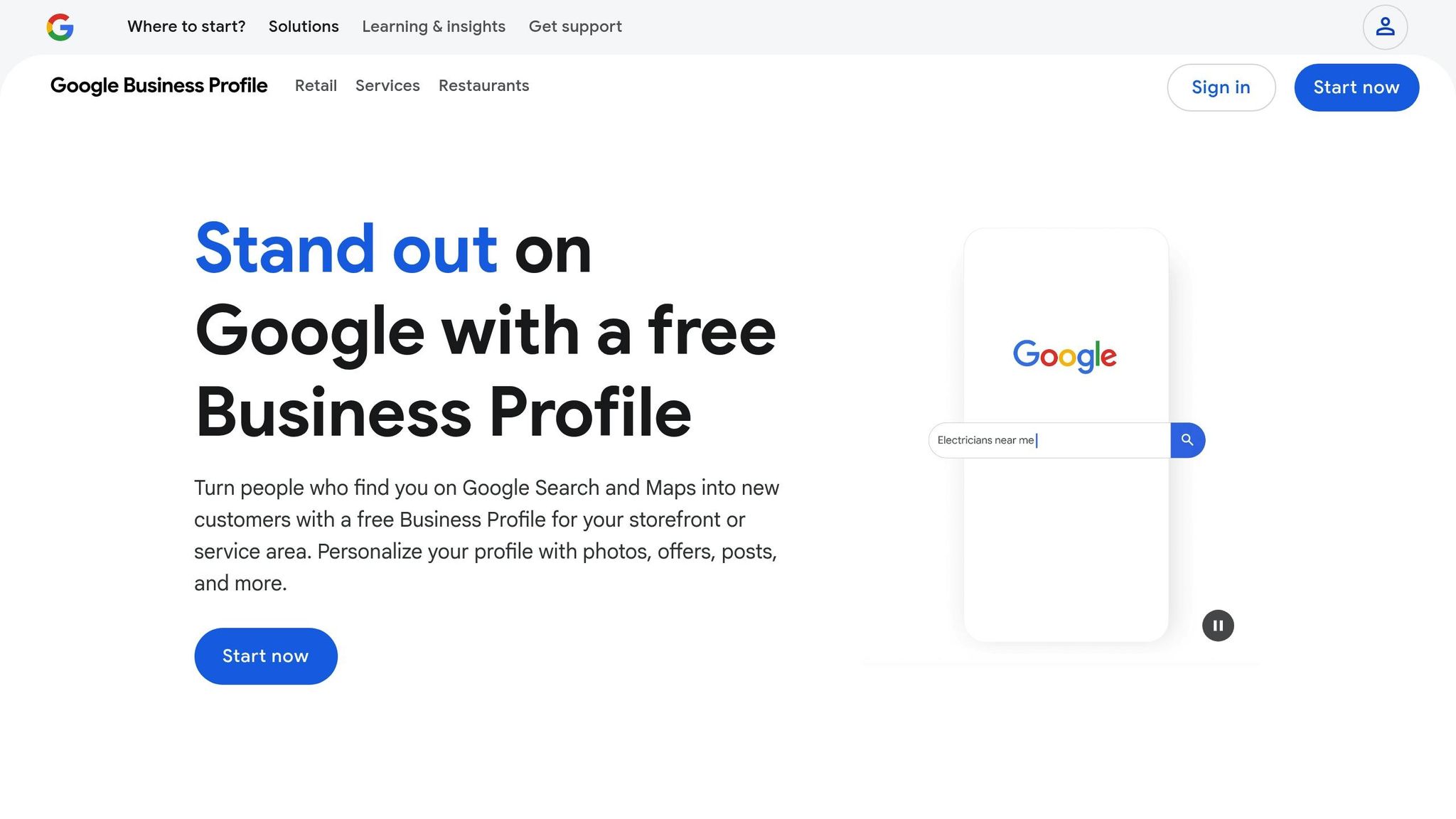
Think of your Google Business Profile as your digital storefront visible to AI. To make it stand out, include specific service categories like termite inspections or rodent exclusion. Encourage customers to leave detailed reviews that mention specific services and outcomes. These reviews are gold for AI systems, as they help identify customer satisfaction and service details.
Make sure to clearly outline your service areas, emergency response times, and pricing ranges. For instance, list every city, neighborhood, and ZIP code you cover within a 25-mile radius. Highlight your emergency response capabilities, estimated response times for different services, and whether you offer after-hours support. Pricing transparency also matters - include ranges like “Termite inspections starting at $150” to give AI a clear picture of your offerings.
Using Structured Data for Better AI Recognition
Structured data is like a guidebook for AI systems, helping them extract and present your business information accurately. By adding schema markup to your website, you make it easier for AI to understand your services and display them effectively.
-
LocalBusiness schema: This is the foundation of your structured data strategy. It provides AI with essential details like your service areas, contact info, operating hours, and payment methods. The more specific your LocalBusiness schema, the better AI can match your services to customer needs.
-
Service schema markup: Use this to break down each pest control service you offer. For example, create separate entries for termite control, rodent removal, bed bug treatments, and preventive maintenance. Include details like service descriptions, pricing, typical duration, and coverage areas. This level of detail helps AI pair customer queries with your exact services.
-
FAQ schema: Perfect for addressing common customer concerns. Use it to answer questions like, “How quickly can you respond to a rodent emergency?” or “What’s included in a termite inspection?” AI systems frequently pull from FAQ schema to provide quick, accurate answers.
-
Review schema: This helps AI interpret and present customer feedback. By implementing review schema, you give AI the context it needs to highlight specific customer experiences and outcomes in its recommendations.
-
HowTo schema: Ideal for pest control businesses, this schema works well for step-by-step guides. Create content like “How to prepare your home for pest treatment” or “Steps to take when you discover termites.” AI often uses this type of structured content to provide detailed answers, reinforcing your authority in the field.
To implement these schemas, add JSON-LD code to your website pages. This format is widely supported by AI systems and won’t disrupt your site’s design. Start with your service pages, location pages, and FAQ sections, and then expand to blog posts and other resources.
Finally, test your structured data to ensure everything is working as intended. Use tools like Google’s Rich Results Test to verify that your schema markup is correctly implemented. Properly tested data ensures that AI systems can process your business information seamlessly, presenting it in an organized way that attracts customers.
Creating AI-Friendly Pest Control Content
AI systems approach content differently than traditional search engines. They prioritize clear, factual information that can be easily extracted and repurposed for conversational responses. If you want your pest control content to stand out, it needs to be structured in a way that AI can quickly interpret and confidently use to answer customer questions.
Writing Content Blocks for AI Parsing
AI favors self-contained content blocks that deliver complete, standalone information. Each paragraph should be designed as a ready-to-cite unit. Start with a clear topic sentence, followed by supporting details that provide depth and clarity.
For example, instead of saying, "We offer comprehensive termite services", you could write: "Termite inspections involve checking crawl spaces, basements, and exteriors using tools like moisture meters and thermal imaging. Licensed technicians look for signs such as mud tubes, wood damage, and moisture that attracts termites. A typical residential inspection takes 60-90 minutes and includes a detailed report with treatment recommendations."
Stick to factual language, avoiding promotional tones. AI systems prioritize straightforward information over marketing fluff. Replace phrases like "We're the best in pest control" with specifics, such as: "Our technicians complete 40 hours of annual training in integrated pest management and hold state-certified licenses in structural pest control."
Make sure your content answers the who, what, when, where, why, and how of pest control scenarios. For instance: "Bed bug heat treatments raise room temperatures to 120-140°F for 4-6 hours, effectively killing all life stages of bed bugs, including eggs, without the use of chemical pesticides. Preparation requires removing heat-sensitive items like electronics, medications, and certain plastics from the treated area."
Break down complex topics into manageable chunks while keeping each paragraph thorough. Cover one specific aspect at a time to help AI systems extract precise information for targeted queries. Once your content is structured this way, tailor it to reflect US standards for better local relevance.
Using Local US Terms and Standards
Localizing your content ensures it resonates with US audiences and aligns with their expectations. AI systems serving US customers look for content that uses American standards, measurements, and terminology. This alignment improves your chances of appearing in relevant searches.
-
Use imperial units like square feet, feet/miles, and Fahrenheit. For example: "Carpenter ant colonies can extend up to 300 feet from their main nest." Provide relatable measurements, such as: "A standard 2,000-square-foot home requires 2-3 hours for a thorough pest inspection."
-
Stick to American English spelling and terminology. Consistency in language helps AI systems match your content to US users’ searches.
-
Incorporate regional pest names that are familiar to Americans. Use terms like "roaches" alongside "cockroaches", "water bugs" for large cockroaches, and "sugar ants" for common household ants. These terms reflect how customers describe their problems.
-
Reference US regulations and certifications to build trust. Mention EPA registration numbers for pesticides, state licensing requirements, and certifications from organizations like the National Pest Management Association. For example: "All our technicians hold state-required structural pest control licenses and complete ongoing education in EPA-approved integrated pest management practices."
-
Highlight seasonal timing relevant to US climates. Discuss pest activity peaks and prevention tips tied to seasons. For example: "During spring, termites often swarm around exterior lighting. In fall, sealing cracks and gaps can prevent rodents from entering your home before winter."
Adding Interactive and Visual Tools
Interactive tools enhance your content by providing structured data that AI systems can easily extract and display. These tools also engage users, offering immediate value while signaling expertise to AI systems.
-
Pest identification quizzes are particularly effective. Create step-by-step tools that guide users through identifying pests based on appearance, behavior, and location. Use clear logic, like: "If the insect is found in the kitchen and has six legs, proceed to question 2. If wings are present and it’s attracted to light, it’s likely a flying ant rather than a termite."
-
Cost estimation calculators help answer pricing questions transparently. Include variables like property size, treatment type, and severity level. For example: "A 2,000-square-foot home with moderate infestation levels might require $300-$500 for treatment." Add explanations for each factor to help AI systems understand the pricing structure.
-
Seasonal treatment planners offer tailored recommendations based on time of year and location. For example: "In March, homeowners in the Southeast should inspect for termite swarmers near exterior lights and check mulch beds for carpenter ant activity. Schedule perimeter treatments before summer begins."
-
Visual identification guides enhance understanding for both users and AI. Include galleries with images from multiple angles, size comparisons, and distinguishing features. Write detailed alt-text and captions, such as: "This is a carpenter ant, identifiable by its large size (up to 0.5 inches) and reddish-black coloring. Commonly found in moist wood, it can cause structural damage."
-
Treatment preparation checklists provide actionable steps for users while offering structured content for AI. For instance: "Bed bug heat treatment preparation: Remove all electronics 24 hours before treatment. Wash clothing and linens in hot water (140°F minimum). Vacuum thoroughly and dispose of vacuum bag contents immediately."
Interactive tools should also collect user input to provide personalized recommendations. This data not only enhances user experience but also helps AI systems identify what information is most relevant, potentially improving your content’s visibility in AI-driven responses to local pest control inquiries. Always include comprehensive explanatory text alongside these tools to ensure AI can parse and understand the context.
sbb-itb-bfd1c41
How Content Amplified Supports GEO for Pest Control
Executing GEO strategies effectively requires a mix of specialized skills and consistent effort. That’s where Pest Control Content Marketing by Content Amplified steps in. They offer tailored marketing solutions specifically for pest control companies navigating the evolving landscape of AI-driven search. With a deep understanding of the industry, Content Amplified ensures that their content strategies not only meet modern AI optimization standards but also address the unique challenges local pest control businesses face. Their expertise pairs seamlessly with the GEO strategies outlined earlier.
Content Amplified Services Overview
Content Amplified takes a dual-focused approach to GEO, crafting content that works for both traditional search engines and AI-powered queries. Their structured, SEO-focused content is designed to establish customer trust and drive engagement.
Their services include creating mobile-friendly pest control websites equipped with online booking tools, simplifying the process for customers to schedule services. They also produce video, audio, and branded storytelling content that showcases your expertise, with widespread content distribution to maximize reach.
To meet businesses at different stages of growth, Content Amplified offers tiered service plans, ensuring every company can find a solution that fits their needs.
Content Amplified Plans Comparison
Content Amplified provides three service tiers, each designed to cater to specific business goals and growth stages. These plans build on each other, offering increasing levels of support and sophistication.
| Plan Name | Price | Description | Features | Ideal For |
|---|---|---|---|---|
| Basic Plan | By Quote | Entry-level content marketing | SEO-focused written content, basic website design, and content promotion | Small pest control businesses starting out |
| Advanced Plan | By Quote | Comprehensive marketing and branding | Includes all Basic Plan features, plus video and audio content, and SEO | Growing companies aiming to expand online |
| Premium Plan | By Quote | Full-service marketing and growth | Includes all Advanced Plan features, plus custom design, storytelling, and analytics | Established companies seeking market leadership |
Each plan is built around close collaboration with Content Amplified’s experienced team, ensuring strategies are customized to meet your specific needs. Pricing is determined through custom quotes, allowing for flexibility based on market conditions, competition, and your business goals.
Measuring and Maintaining GEO Performance
To gauge the success of your GEO strategy, focus on metrics that capture both immediate visibility and long-term growth. With 97% of potential customers finding pest control services through local search - often during urgent situations - your tracking system needs to address both real-time visibility and ongoing performance trends.
Tracking AI Search Visibility and Local Rankings
Tools like Google Search Console and Google Analytics 4 are essential for monitoring how AI-powered search engines display your content. These free platforms provide insights into the performance of local search terms like "termite inspection near me" or "emergency ant control." By setting up custom dashboards, you can keep a close eye on what matters most.
Pay special attention to Map Pack rankings since the top three positions capture 54.4% of all clicks. Additionally, track actions on your Google Business Profile, such as calls, direction requests, and reviews. For deeper insights into customer behavior, consider using specialized tools that analyze recurring customer trends.
Key metrics to monitor include customer actions (like form submissions, phone calls, and page engagement) and revenue-focused data (cost per lead, conversion rates, and customer lifetime value). For a more detailed analysis, calculate metrics like:
- Cost per lead by service area
- Conversion rates by location
- Customer lifetime value by traffic source
- Lead-to-customer conversion ratios
Set clear benchmarks to measure progress over time. For instance, your 3-month goals might include consistent Map Pack visibility for primary services, a 25% boost in local search traffic, a 15% improvement in conversion rates, and maintaining an average review rating of 4.5 or higher. By the 6-month mark, aim for dominant Map Pack positions and a 50% increase in local search leads. At 12 months, focus on achieving market leadership and sustainable lead generation.
Regular Updates and Content Refreshes
Consistency is key to maintaining GEO performance. Regular reviews of your metrics should guide updates to your content and strategy.
Schedule weekly check-ins to track core metrics, monthly reviews for analyzing trends and competitor activity, and quarterly assessments to re-evaluate ROI and adjust budgets. Keep tabs on both your costs - such as tools, content creation, technical updates, and time - and the revenue generated through direct leads, service income by location, customer lifetime value, and repeat business.
Refreshing your content regularly is also essential for staying relevant in AI-driven search results. Update your Google Business Profile frequently with fresh photos, accurate service details, and seasonal pest control tips. Revise location-specific content every quarter to account for changing pest patterns, new services, and updated pricing.
Since over 50% of home service decisions are made within four hours of a search, having up-to-date and accurate information is critical to meet the needs of customers searching for urgent pest control solutions.
Conclusion: Getting Results with GEO and AI Search
AI-driven search is transforming how customers discover pest control services. Recent statistics reveal that more than 58% of Google searches now end without a click. Additionally, Google AI Overviews appear in 40.2% of local business queries. This shift makes it clear that traditional SEO strategies alone aren't enough to engage the increasing number of users relying on AI-generated answers.
To stay relevant, a GEO strategy requires optimized local profiles, AI-friendly content, and consistent performance tracking. Leading pest control companies are already monitoring how often AI cites their business and ensuring their brand is consistently recognized across platforms. This approach not only improves visibility in AI-generated results but also leads to quicker outcomes and measurable returns.
Early adopters are reaping the benefits. With AI Mode usage increasing by 4x and zero-click rates hitting 92–94%, businesses that focus on GEO visibility now are positioning themselves for long-term success. By building strong AI visibility today, companies can ensure their brands are associated with expertise as these systems evolve.
For businesses with solid SEO foundations, GEO investments typically deliver a positive ROI within 90 days, with full benefits often realized in 6–12 months. Keeping profiles and content updated is key to maintaining this momentum. These results confirm the effectiveness of the strategies shared throughout this guide.
AI queries are also becoming more detailed, averaging 7.22 words compared to 4.0 in traditional searches. With 47% of professionals using AI tools for work-related research, customers are asking more specific and nuanced questions. Pest control companies that provide clear, accurate, and thorough answers through optimized content and profiles will capture this growing audience. By doing so, they'll ensure their services remain visible and accessible exactly when potential customers need them most.
FAQs
Generative Engine Optimization, or GEO, shifts the focus from traditional search rankings to optimizing content for AI-generated responses and conversational search. Unlike conventional SEO, which leans heavily on tactics like keyword placement and link building, GEO is all about crafting well-organized, authoritative content that AI tools can easily pull into their responses.
For pest control businesses, this means creating content that directly answers customer questions, boosting local visibility through platforms like Google My Business, and ensuring your branding and media are optimized for AI use. By embracing GEO, you can position your services to stand out in AI-driven search results, catering to the expectations of today’s tech-savvy audience.
To stand out in AI-driven search results, local pest control companies should focus on integrating structured data into their websites. This means using schema markup to clearly display key details such as your business name, address, phone number, services you provide, and customer reviews. Including review schema is especially helpful, as it allows AI to better interpret your ratings and understand the quality of your services.
It's also crucial to have a fully optimized Google Business Profile. Make sure it includes accurate business details, high-quality photos, and regular updates to keep it fresh. Don’t forget to periodically review and update your structured data to ensure it stays accurate and aligned with the latest AI algorithms. This proactive approach can significantly increase your chances of appearing prominently in search results.
Pest control companies can gauge the effectiveness of their Generative Engine Optimization (GEO) strategy by keeping an eye on important metrics like local search rankings, referral traffic, and how often their business shows up in AI-generated content. This includes appearances in AI-driven snippets, map listings, and local search summaries.
It’s also crucial to monitor customer engagement metrics, such as inquiries, bookings, and conversions. These numbers reveal how well your content encourages potential customers to take action. Regularly reviewing these indicators can highlight opportunities to refine your approach and ensure your GEO strategy is achieving its goals.