
If you're in the pest control business, here's the bottom line: local search is evolving fast, and AI tools like ChatGPT are changing how customers find services. Traditional Google search results are no longer the only game in town. People are now asking AI assistants specific, conversational questions like, "What's the best pest control company near me?" To stay competitive, you must optimize for both Google's GEO algorithms and AI-driven platforms.
Key Takeaways:
- Google GEO Algorithms: Focus on proximity, relevance, and prominence to rank higher in local searches. Optimize your Google Business Profile (GBP), use consistent business info, and target ZIP codes.
- AI Search Optimization: Create natural, conversational content tailored to common questions AI users ask. Leverage AI tools to generate location-specific pages and seasonal pest control tips.
- Mobile Matters: Most local searches happen on smartphones. Ensure your site loads fast, is easy to navigate, and offers click-to-call or online booking.
- Reviews Build Trust: Positive, recent reviews boost rankings and customer confidence. Respond to all reviews professionally.
Action Steps:
- Audit Your Google Business Profile: Ensure accurate info, add photos, and post updates weekly.
- Use AI for Content: Draft hyper-local pages and seasonal blogs with tools like ChatGPT.
- Encourage Reviews: Ask for feedback after every service and aim for 4-5 new reviews monthly.
- Track Performance: Use analytics to see what's driving traffic and adjust accordingly.
By combining strong local SEO with AI tools, you can ensure your pest control business stays visible and competitive in a rapidly changing search landscape.
Adapting SEO Strategies for AI: Mat Rogers of Lizard Marketing | PCM 137

How Google GEO Algorithms Work for Local Search
Google's location-based search system plays a crucial role in driving local leads for pest control businesses. Understanding how these algorithms work can help you capture more leads and improve your visibility.
Google's Location-Based Search System Explained
Google's GEO algorithms rely on three main factors to rank businesses in local search results: proximity, relevance, and prominence. For example, when someone searches for "pest control near me" or "exterminator in Phoenix", Google evaluates the distance between the searcher and nearby businesses, then prioritizes results based on how well each business meets the searcher's intent.
Proximity refers to how close your business is to the searcher. If someone in downtown Austin searches for pest control, Google tends to favor businesses within a few miles of that location. However, proximity alone isn’t the whole story - businesses with stronger optimization can sometimes outrank closer competitors.
For pest control companies, service areas are especially important. Unlike businesses with fixed locations like restaurants, pest control companies often serve multiple neighborhoods. You can set your service area to include specific ZIP codes, cities, or a radius around your location, helping Google understand where you operate.
Google also tailors results based on the searcher’s location. Someone searching from home could see different results than someone searching from their office, even if they use the same keywords.
Local Ranking Factors That Matter Most
Several factors influence how well your pest control business ranks in local search results. One of the most critical is your Google Business Profile (GBP). Ensure it includes complete and accurate information, regularly updated posts, high-quality photos, and active customer engagement.
Consistency across business listings is another key factor. Your Name, Address, and Phone number (NAP) should be identical across all platforms. Even minor inconsistencies - like "ABC Pest Control" versus "ABC Pest Control Services" - can confuse search engines and hurt your visibility.
Customer reviews also play a big role. Frequent, recent, and positive reviews can significantly boost your rankings, while sparse or outdated reviews might hold you back.
Local citations from directories and authoritative websites further strengthen your credibility. Listings on platforms like the Better Business Bureau, Angie's List, or your local chamber of commerce carry more weight than generic directories.
On your website, on-page optimization for local search is essential. Include location-specific pages, embed Google Maps, and clearly display your service areas. Make sure your local phone numbers and addresses appear consistently in the contact and footer sections.
These foundational strategies lay the groundwork for more targeted, U.S.-specific approaches to local SEO.
U.S.-Specific Local SEO Tactics for Pest Control
To improve local rankings, optimize your content for specific ZIP codes. For example, a pest control company in Dallas could target areas like 75201, 75225, and 75230. Create pages that feature neighborhood-specific content, including local landmarks and pest issues unique to those areas.
Neighborhood-level optimization can also make a big difference. Develop pages that address hyper-local concerns, like "Termite Control in Buckhead Atlanta" or "Rodent Prevention in Brooklyn Heights." These narrowly focused pages often face less competition than broader city-wide terms.
When writing for a U.S. audience, use imperial measurements such as square feet, miles, and acres. This aligns with how American customers think about their properties and underscores your relevance to local searchers.
Tailoring content to state-specific pest challenges can also boost your local relevance. For instance, a Florida pest control company might focus on fire ants and palmetto bugs, while a Minnesota company could highlight box elder bugs and cluster flies. Include information about local pest seasons, regulations, and treatment methods.
Finally, take advantage of seasonal optimization based on your region’s climate. Pest control needs vary throughout the year. In northern states, winter rodent control might be a priority, while southern states might emphasize year-round termite prevention. This seasonal focus can help capture search traffic when demand is highest in your area.
Using AI and GPT Tools for Local SEO and Content
Artificial intelligence is changing the game for pest control businesses looking to improve their local search presence. With AI tools, you can create location-specific pages, tailor your messaging for diverse audiences, and keep up with shifting search trends - all without needing advanced technical expertise.
Creating Location-Specific Content with AI
AI tools are incredibly effective at crafting hyper-local content that connects with customers in specific neighborhoods. For instance, you can use AI to generate content for each service area, addressing local pest concerns and incorporating details unique to the community.
When building location pages, focus on local pest patterns and seasonal challenges. For example, you could prompt an AI tool to write about "carpenter ant prevention in Pacific Heights, San Francisco, with an emphasis on Victorian homes and moisture issues from fog." This approach ensures the content reflects the area’s specific architecture, climate, and pest behaviors, making it more relatable for residents.
AI also makes it easier to scale content creation for multiple service areas. By developing templates that include ZIP codes, neighborhood names, and region-specific pest problems, you can efficiently generate unique pages for each location. The secret lies in crafting detailed prompts that include local context - like housing types, weather conditions, and common pest issues.
For service page optimization, customize your core service pages to address location-specific challenges. A termite inspection page for Miami, for instance, might highlight year-round activity and risks from hurricane damage, while a similar page for Denver could focus on seasonal swarms and clay soil-related foundation issues. This level of localization ensures your content resonates with the audience in each market.
AI Content Personalization for Pest Control
AI tools can also help you personalize content based on customer behavior and preferences. By analyzing website traffic and customer inquiries, you can create messaging that addresses specific concerns at the right time.
Seasonal content optimization becomes more streamlined with AI. You can set up content calendars that adjust automatically based on pest activity cycles in your area. For example, you might create spring content focused on ant prevention, summer messaging about mosquito control, and fall posts addressing rodent exclusion before winter.
AI can also generate content variations for different customer groups. If you have a high-performing blog post about termite prevention, AI can create versions tailored to homeowners, property managers, or even specific property types like condos, single-family homes, or commercial buildings.
For customer communication, AI tools can help you personalize follow-up emails and service reminders. By factoring in treatment history and seasonal trends, you can provide a more relevant experience while saving time on repetitive tasks.
These personalized content strategies not only improve customer engagement but also boost your visibility in local search.
Advanced AI Tools for Better Search Visibility
AI tools are especially useful for optimizing content for voice searches, which are often longer and more conversational. For instance, people might search, "What’s the best pest control company near downtown Portland?" instead of simply typing "pest control Portland." AI can help you identify and integrate these natural language patterns into your content.
AI can also track search trends and competitor activity to suggest timely content updates, ensuring your pages stay relevant as search behaviors evolve.
Implementing schema markup and structured data - which helps search engines better understand your content - can be complex to do manually. AI tools simplify this process by generating accurate markup for your location pages, services, and customer reviews.
For content gap analysis, AI identifies areas where competitors rank but you don’t, offering suggestions for new topics or page updates to capture additional local search traffic.
Lastly, AI supports mobile optimization by analyzing how your content performs on different devices. It can recommend adjustments to improve the experience for mobile users, who make up the majority of local searches for pest control services.
sbb-itb-bfd1c41
Step-by-Step Local Search Optimization Strategies
Now that you’ve got a handle on how AI can improve your local content, it’s time to dive into actionable strategies to boost your pest control business’s visibility in local search results. These practices work together to help you attract more customers in your area.
Google Business Profile Optimization Guide
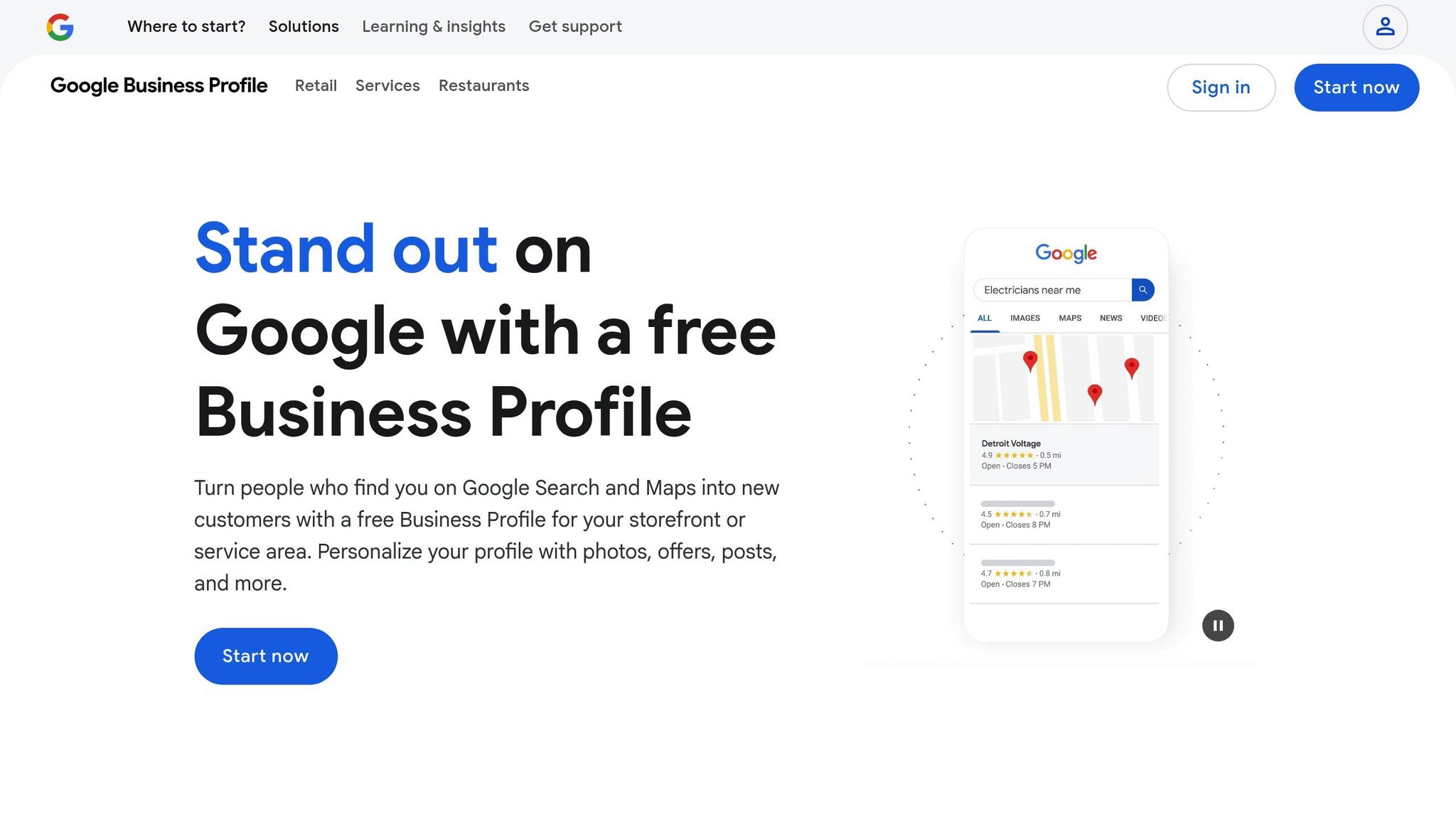
One of the most important steps in local SEO is managing your Google Business Profile effectively. This profile is a cornerstone of your online presence and can significantly impact your rankings in local search results when optimized correctly. Start by ensuring your business information - like your name, address, and phone number - is consistent across all online platforms.
Set your business hours accurately, including any seasonal or holiday changes. For example, if your pest control services extend hours during peak seasons, make sure this is reflected in your profile.
Select the right business categories. Use "Pest Control Service" as your primary category, and consider adding secondary categories like "Termite Control Service" or "Wildlife Control Service" if they apply. While you can choose up to 10 categories, focus on the ones that generate the most revenue for your business.
Regularly update your profile with high-quality photos. Share images of your team in uniform, before-and-after shots of pest treatments, and branded service vehicles. Photos of technicians using professional tools in protective gear can establish trust with potential customers.
Use Google Posts to share updates, tips, and special offers. For instance, you could post about termite swarming in the spring or rodent prevention tips as winter approaches. These posts not only keep your profile engaging but can also improve your local ranking.
Leverage the Q&A feature to address customer questions. Provide detailed, keyword-rich answers that include specific neighborhoods or ZIP codes when discussing your service area. This adds a personal touch and helps with local SEO.
How to Use AI Content Tools Effectively
AI tools can streamline your content creation process while ensuring your marketing materials maintain a consistent tone and focus. Start by crafting detailed prompts that reflect your brand’s voice, your target audience, and the specific details of the areas you serve.
Use AI to create location-specific service pages. For example, generate a page for termite inspections in Charleston, SC, highlighting local climate factors, architectural styles, and common pest problems. This approach ensures your content resonates with local customers while incorporating relevant keywords.
Develop seasonal content calendars with AI. Map out pest activity cycles in your region and create blog posts on topics like spring ant prevention, summer mosquito control, or fall rodent exclusion. AI can also help tailor this content for different audiences, such as homeowners versus property managers.
Optimize for voice search by identifying common conversational queries in your area. For example, customers might ask, “What’s the best way to get rid of ants in my kitchen?” or “How much does termite treatment cost in [city name]?” Create content that directly answers these questions and includes local context and pricing in U.S. dollars.
AI can also assist in crafting personalized customer communication templates for follow-up emails, service reminders, and educational content. For instance, you might send mosquito prevention tips to customers with swimming pools or rodent control advice to those with wooded properties.
Finally, track your content’s performance using AI analytics tools. Identify which topics and formats drive the most engagement, and tweak your strategy to better connect with your local audience.
Building Customer Trust Through Reviews and Mobile Sites
Pair your AI-optimized content with strong customer engagement strategies to build trust. Encourage satisfied customers to leave reviews, and address negative feedback professionally and promptly. Sending review requests via text shortly after completing a service can increase the likelihood of receiving positive feedback.
Responding to reviews is just as important. Thank customers for positive comments, and when addressing negative ones, acknowledge their concerns and offer to resolve the issue offline. This shows professionalism and reassures potential customers who are reading your reviews.
Ensure your website is mobile-friendly, as most local searches happen on smartphones. Make sure your phone number is clickable, contact forms work seamlessly, and service pages load quickly - even on slower connections.
Simplify booking by offering an easy-to-use online scheduling tool that works flawlessly on mobile devices. Clearly display pricing, available time slots, and detailed service descriptions so customers can book without needing to call.
Feature customer testimonials prominently on your website and marketing materials. Highlight reviews that mention specific services or local areas to provide valuable social proof.
Keep an eye on your online reputation across platforms like Google, Yelp, Facebook, and industry-specific sites such as Angie's List. Set up alerts for new reviews so you can respond quickly and maintain a positive presence.
Lastly, leverage glowing reviews in your marketing. Use them in Google Ads, social media posts, or email campaigns. Creating eye-catching graphics with top reviews can add credibility and attract new customers.
Key Points for GEO and AI Search Success
Google's GEO algorithms, combined with AI-driven content tools, can significantly enhance your local visibility when used strategically. At the heart of this strategy is your Google Business Profile, which serves as the cornerstone of local SEO. AI tools, on the other hand, can help you keep this profile updated and optimized with consistent, location-specific messaging.
For pest control businesses, blending Google's location-based algorithms with AI tools creates a powerful formula for dominating local search results. The key is to treat these tools as complementary, not standalone, strategies.
Consistency is critical. Ensure your business information - like your name, address, and phone number - is uniform across all platforms. AI tools can simplify this process by generating tailored variations of your core message for different platforms and formats.
Don’t overlook mobile optimization. The majority of local pest control searches happen on smartphones. Google's algorithms favor businesses that offer a seamless mobile experience, so focus on fast-loading pages, clickable phone numbers, and user-friendly booking systems that work effortlessly on all devices.
What's Next for Local SEO in Pest Control
As local SEO continues to evolve, new trends are shaping how pest control businesses connect with customers. Two major developments are voice search and AI-enhanced results, both of which are becoming central to how people find services. Google's algorithms are increasingly adept at understanding user intent and location, so your content needs to be precise, helpful, and relevant.
Hyper-local content is growing in importance. Instead of targeting broad areas like "Dallas pest control", businesses that zero in on specific neighborhoods, ZIP codes, or even housing developments will see better results. AI tools make it easier to create this hyper-localized content at scale, saving time while improving relevance.
Visual search is another emerging trend. People are starting to use their phone cameras to identify pests and search for solutions. To stay competitive, your business should offer high-quality images showcasing common pest issues, treatment methods, and before-and-after results. These visuals can help your business appear in visual search results.
Finally, integrating customer data with AI tools allows for more personalized marketing. Whether your customers are dealing with seasonal ant infestations or year-round termite problems, AI can help you tailor campaigns and content to meet their specific needs.
Action Steps for Pest Control Business Owners
To strengthen your local SEO with GEO and AI strategies, here are some practical steps you can take right away:
-
Audit your Google Business Profile: Ensure all information is accurate and complete. Add professional photos, respond to reviews, and post weekly updates about seasonal pest issues in your area. Aim to complete this within the next two weeks.
-
Start small with AI tools: Begin by using AI for specific tasks, like creating location-focused service pages or drafting seasonal blog posts. Dedicate a few hours each week to experimenting with these tools, refining your approach as you go.
-
Monitor your performance: Use Google Business Profile insights and website analytics to track which content and keywords are driving local traffic and customer inquiries. This data will help you fine-tune your strategies.
-
Manage reviews effectively: Develop a system to encourage happy customers to leave positive feedback and handle negative reviews professionally. Aim for 4-5 new reviews each month to maintain strong visibility in local search results.
-
Plan your content calendar: Blend seasonal pest trends with local events and concerns. AI tools can help you brainstorm ideas and draft content, but always review and adjust to ensure it aligns with your brand voice and local expertise.
Lastly, stay updated on industry changes. Set up Google Alerts for terms like "local SEO updates" and "AI marketing tools" to keep an eye on new developments. Staying informed will help you adapt quickly and capitalize on emerging opportunities.
FAQs
Pest control businesses can leverage AI tools like ChatGPT to boost their local search rankings by crafting hyper-localized content. This type of content is tailored to specific neighborhoods or cities, making services more relevant to local customers and increasing visibility in search engine results.
AI can also play a key role in optimizing your Google Business Profile. It can suggest accurate, engaging descriptions, help you respond to customer reviews quickly, and identify trending keywords unique to your area. Beyond that, AI tools can assist in designing targeted ad campaigns and refining local SEO strategies, giving you an edge in attracting more customers and staying competitive.
To stand out in local search results, pest control companies should focus on claiming and verifying their Google Business Profile. Double-check that your business details - like your name, address, and phone number - are accurate and consistent everywhere they appear online. Keeping your business hours updated, responding quickly to customer reviews, and sharing high-quality photos or videos of your services can also help boost engagement.
Use location-specific keywords in your profile description and posts to match local search intent. It's equally important to ensure your business information is consistent across directories and your website. This consistency not only builds trust but also improves your visibility in local search rankings, making it easier for potential customers to find you.
Focusing on hyper-local content is a game changer for pest control businesses looking to connect with nearby customers. By addressing specific local needs and search intent, businesses can stand out in AI-driven searches, like "near me" queries or voice searches through tools like voice assistants and AI platforms.
Here’s how it works: using localized keywords, optimizing Google Business Profiles, and adding structured data can significantly improve rankings in Google’s Local 3-Pack. But it’s not just about showing up - it’s about building trust. Positive reviews, mentions in local directories, and marketing campaigns tailored to the community create credibility. This approach doesn’t just drive more calls and bookings - it helps establish long-term customer loyalty.